
I. Introduction: The Silent Dialogue Between Art and Space
In the realm of high-end art collection, understanding Architectural Materials Art Resonance is the key to transforming a space. Art is not merely an object to be acquired; it is an experience, profoundly shaped by the environment in which it resides. The walls, floors, and ceilings—often perceived as mere backdrops—are, in fact, silent collaborators that define the visual context and emotional resonance of every artwork. For discerning collectors, curating a space where art truly thrives means recognizing and harnessing this intrinsic dialogue between architectural elements and artistic expression.
This article delves into how three fundamental architectural materials—concrete, wood, and glass—each possess unique properties that can either elevate or diminish an artwork’s presence. We will explore their inherent characteristics, their historical interplay with art, and practical considerations for integrating them into a cohesive and impactful display strategy. Our aim is to guide high-end collectors in creating environments where their cherished pieces engage in a timeless conversation with their surroundings, enhancing both the art and the living experience.
II. Concrete: The Brutal Elegance and Stoic Canvas
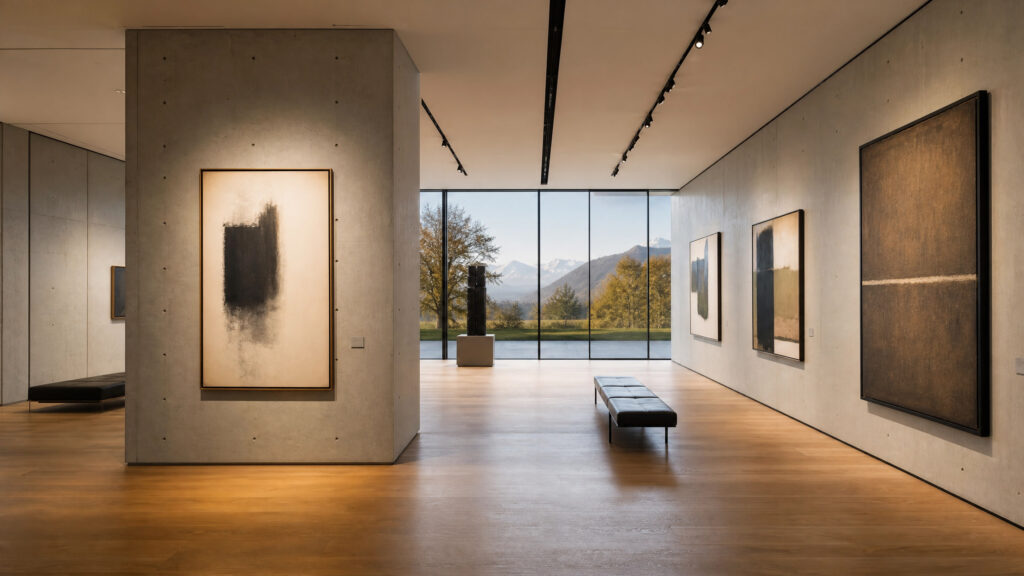
Concrete, often associated with raw, minimalist, and even Brutalist aesthetics, has transcended its utilitarian origins to become a sophisticated architectural material. Its inherent qualities—strength, durability, and a neutral, often cool, grey palette—make it a powerful, albeit stoic, canvas for art. When used thoughtfully, concrete provides an unparalleled backdrop that emphasizes the form, texture, and color of the artwork itself, imbuing it with a sense of permanence and gravitas.
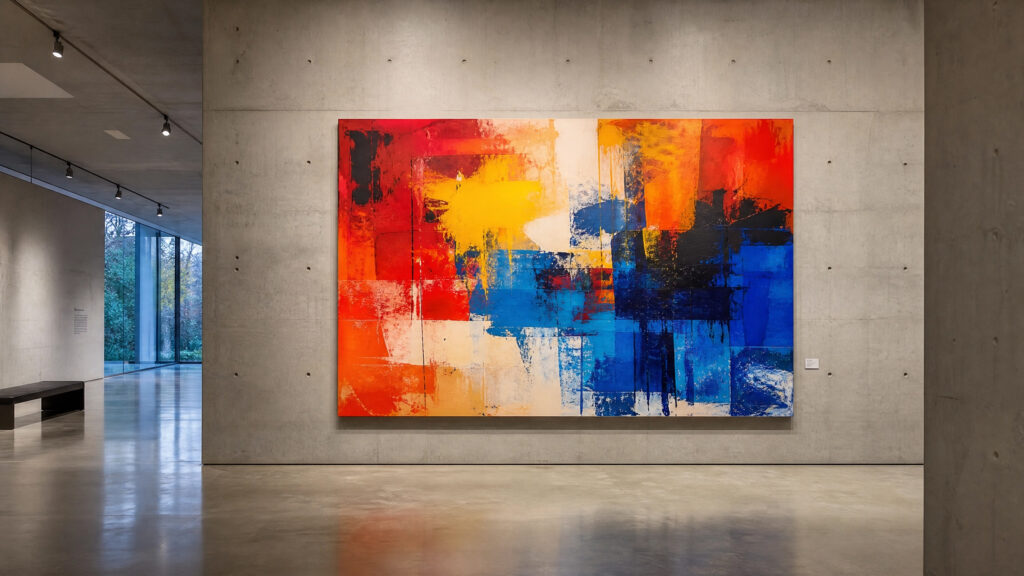
The impact of concrete on art display is profound. Its unadorned surface eliminates visual distractions, forcing the viewer’s attention squarely on the artwork. This stark neutrality can amplify the vibrancy of a colorful painting, highlight the intricate details of a sculpture, or underscore the conceptual depth of a contemporary installation. However, its challenges lie in its potential to feel cold or industrial. Successful integration requires careful consideration of lighting, complementary textures, and art choices that can soften or contrast with its inherent austerity.
The aesthetic principles of using raw materials in modern spaces are extensively documented by [ArchDaily], highlighting how texture defines architectural character.
A. The Nature of Concrete: From Raw to Refined
Modern concrete finishes range from rough, exposed surfaces that celebrate its raw materiality to highly polished, almost luminous planes that mimic natural stone. This versatility allows architects and designers to tailor its appearance to specific artistic intentions. The subtle variations in its texture and tone, from light grey to charcoal, offer a nuanced palette that can be surprisingly rich. Its thermal mass also contributes to a stable environment, a crucial factor for art conservation. Refined concrete finishes are a staple of modern Architectural Materials Art Resonance designs.
B. Concrete and Modern Art: A Symbiotic Relationship
Concrete finds its most symbiotic relationship with minimalist, abstract, and sculptural works. The clean lines and often monochromatic nature of concrete walls resonate deeply with the principles of minimalism, where form and essence are paramount. Abstract paintings, with their emphasis on color and composition, gain intensity against concrete’s quiet backdrop. Sculptural pieces, particularly those with strong geometric forms or industrial materials, appear grounded and monumental when displayed within concrete spaces. The material’s ability to absorb light rather than reflect it also helps to define the contours and shadows of three-dimensional art, enhancing its sculptural presence.
III. Wood: Warmth, Texture, and Organic Narrative
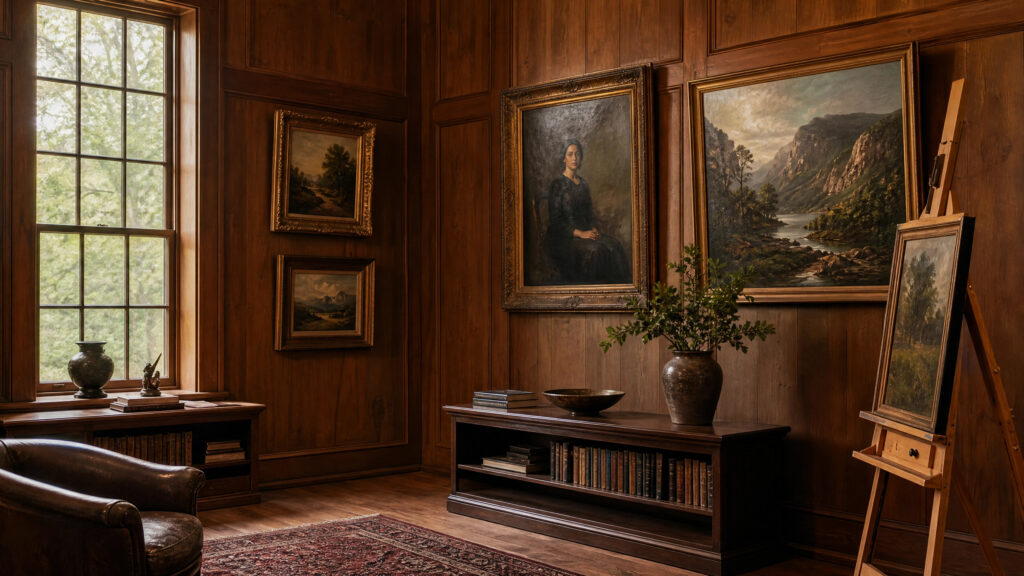
The organic narrative of wood is essential to the warmth found in Architectural Materials Art Resonance. In stark contrast to concrete’s stoicism, wood introduces warmth, texture, and an organic narrative into the art display. As a natural material, wood possesses an inherent character—diverse in grain, color, and finish—that evokes nature, history, and craftsmanship. From light, airy maples to rich, dark walnuts, each type of wood carries its own story and contributes a distinct emotional quality to a space.
Wood’s impact on art is to create a softer, more intimate, and inviting setting. It can beautifully complement artworks with natural themes, traditional crafts, or pieces made from organic materials, enhancing their inherent qualities. The tactile richness of wood adds a layer of comfort and approachability, making a collection feel more integrated into a living environment. However, the challenge lies in selecting the right wood type and finish to avoid competing with the artwork. Overly busy grains or strong colors can sometimes distract from delicate pieces, requiring a thoughtful balance.
A. The Character of Wood: A Living Material
Wood is a living material, constantly evolving with age and exposure. Its natural variations, knots, and imperfections tell a story, adding depth and authenticity to any interior. Finishes, from raw and unfinished to highly polished or stained, further dictate its aesthetic contribution. The acoustic properties of wood also contribute to a warmer, more inviting soundscape, which can subtly influence the perception of art within the space.
B. Wood and Traditional/Organic Art: A Harmonious Pairing
Wood creates a harmonious pairing with classical paintings, particularly portraits and landscapes, where its natural warmth can enhance the richness of oil pigments and historical narratives. Folk art, textiles, and sculptures crafted from natural materials like stone or other woods find a natural home against wooden backdrops, where their textures and origins are celebrated. The material’s ability to evoke a sense of heritage and comfort makes it ideal for displaying pieces that tell stories of tradition, nature, or human connection. [To ensure your artwork is perfectly proportioned before lighting, consult our [wall art size calculator] for expert scaling advice.]
Traditional art pairs perfectly with wood to create a classic Architectural Materials Art Resonance.
For those looking to acquire organic-themed pieces, platforms like [Saatchi Art] offer a curated selection of contemporary works that resonate beautifully with natural textures.
IV. Glass: Transparency, Light, and Dynamic Interaction
Glass, with its inherent transparency, reflectivity, and fluid nature, offers a dynamic and often ethereal dimension to art display. It is a material that constantly interacts with light and the external environment, blurring the boundaries between interior and exterior, and transforming the viewing experience into something fluid and ever-changing.
Its impact on art is to create luminous, often weightless displays. Glass is ideal for installations, light art, or works that specifically play with reflection, refraction, and transparency. It can allow artworks to be viewed from multiple perspectives, integrating them with the surrounding landscape or urban environment. However, glass presents unique challenges: glare, unwanted reflections, and UV exposure can all detract from an artwork or even cause damage. Careful placement, specialized low-iron or anti-reflective glass, and strategic lighting (refer to our guide on [Art Lighting for Collectors] for optimal illumination) are crucial for successful integration.
A. The Essence of Glass: A Medium of Light
Glass serves as a fluid medium within the framework of Architectural Materials Art Resonance. Modern architectural glass is far more than just a transparent barrier. It can be tinted, etched, laminated, or digitally printed, offering a vast array of aesthetic and functional possibilities. Low-iron glass provides exceptional clarity, while smart glass can dynamically adjust its opacity. Its ability to transmit, reflect, and refract light makes it a medium of light itself, capable of transforming ambient conditions into an integral part of the art experience.
B. Glass and Contemporary/Light Art: Boundary-Pushing Displays
Glass excels in enhancing contemporary installations, digital art, and works that utilize light as a primary medium. Large glass walls can frame a distant cityscape as part of an artwork, or create an immersive environment where light installations interact with reflections. Galleries or homes with expansive glass elements can leverage natural light to dramatically alter the perception of art throughout the day, creating dynamic and boundary-pushing displays. This material is particularly effective for showcasing art that seeks to engage with its surroundings rather than being isolated from them. Light art pushes the boundaries of what Architectural Materials Art Resonance can achieve.
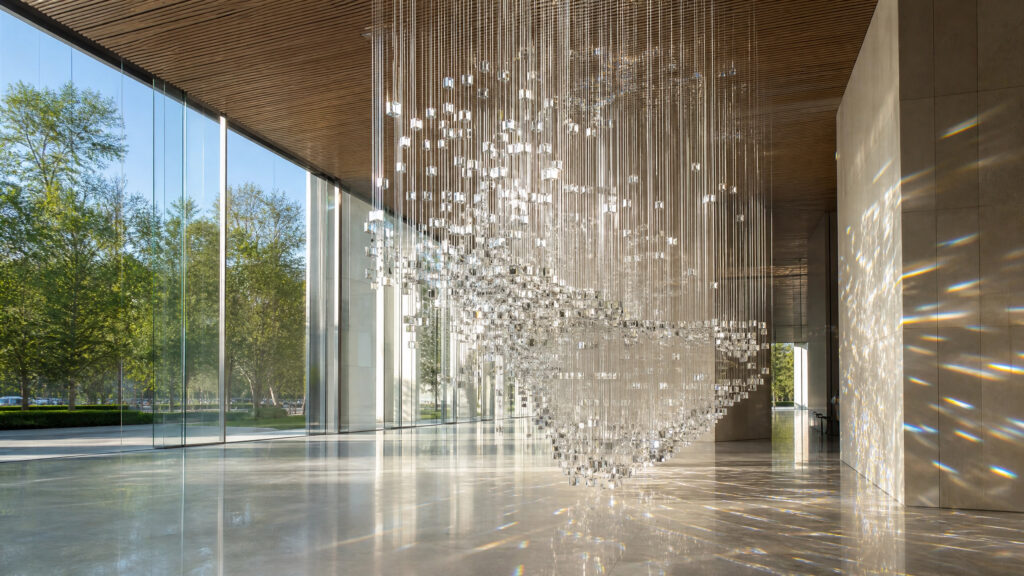
V. The Art of Juxtaposition: Blending Materials for Enhanced Resonance
To achieve a sophisticated Architectural Materials Art Resonance, one must master the art of juxtaposition between textures. The true mastery of Architectural Materials Art Resonance often lies not in the exclusive use of a single material, but in the thoughtful juxtaposition and blending of different elements. Strategic combinations can create dynamic contrasts and harmonies, enriching the visual narrative and emotional depth of a space. By understanding how materials interact, collectors can orchestrate a symphony of textures, colors, and light that elevates their entire collection.
A. Strategic Combinations: Creating Visual Dialogues
Consider the powerful dialogue created by a raw concrete wall providing a stark, minimalist backdrop to a delicate wooden sculpture, or a vibrant glass art piece set against the warm, earthy tones of a timber floor. These contrasts highlight the unique qualities of both the art and the materials, preventing visual monotony and drawing the eye to specific focal points. Similarly, the cool precision of steel can be softened by the organic warmth of wood, creating a balanced and sophisticated aesthetic. The key is to ensure that each material choice serves to enhance, rather than compete with, the artwork it accompanies. Contrast is the secret ingredient in a successful Architectural Materials Art Resonance strategy.
B. Creating Visual Flow: Guiding the Collector’s Journey
Beyond individual pairings, materials can be used to create a visual flow that guides the viewer’s eye through a collection or an entire residence. A transition from a bright, glass-filled entrance to a more intimate, wood-lined viewing room can subtly shift the mood and focus. Concrete corridors might lead to a vibrant art display, acting as a neutral palate cleanser before a new visual experience. This thoughtful sequencing of materials and art transforms a space into a curated journey, where each step reveals a new facet of the collection and its architectural context.
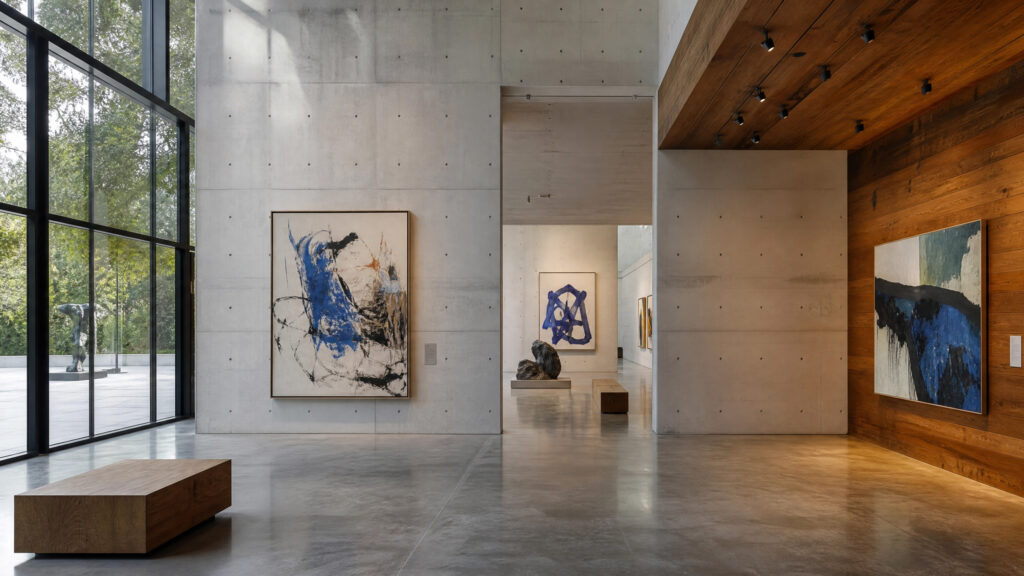
VI. Practical Considerations for High-End Collectors
For high-end collectors, the integration of Architectural Materials Art Resonance extends beyond aesthetics to encompass critical practical considerations. The longevity and preservation of valuable artworks depend heavily on the environmental conditions created by the surrounding materials. A holistic approach, involving expert consultation and meticulous planning, is paramount.
A. Material Selection and Conservation
Conservation is a critical pillar when implementing Architectural Materials Art Resonance in a private gallery. Matching architectural materials to the art collection’s style and, crucially, its conservation needs is non-negotiable. For instance, while wood offers warmth, its inherent hygroscopic nature means it can absorb and release moisture, potentially affecting humidity levels. Concrete, though stable, can be porous and may require sealing. Glass, while visually stunning, necessitates solutions for UV filtration and glare reduction to protect sensitive artworks from fading or damage. Understanding these material-specific properties is vital for long-term preservation. [For a comprehensive guide on preserving your collection, consider a professional lighting audit.]
B. Environmental Control: The Unseen Protectors
Beyond the materials themselves, the overarching environmental control systems—humidity, temperature, and light management—are the unseen protectors of a collection. Modern HVAC systems, coupled with smart climate controls, can maintain stable conditions regardless of external fluctuations. Specialized glazing and advanced lighting systems (as discussed in our [Art Lighting for Collectors] guide) further mitigate risks. The goal is to create a microclimate within the display area that is optimal for each artwork’s specific requirements, ensuring its integrity for generations. Environmental controls ensure the longevity of your Architectural Materials Art Resonance project.
C. Professional Consultation: The Value of Expertise
The complexity of integrating high-value art with sophisticated architectural design underscores the value of professional consultation. Collaborating with experienced architects, interior designers, and art consultants ensures that aesthetic vision aligns with practical and conservation imperatives. These experts can navigate the nuances of material science, lighting design, and environmental engineering to create a seamless and protective environment. [To perfectly plan your space, utilize our [wall art size calculator] for optimal art placement.]
Professional consultation is essential for ensuring that Architectural Materials Art Resonance aligns with long-term preservation goals.
VII. Conclusion: Crafting a Holistic Art Experience
Ultimately, crafting a space with Architectural Materials Art Resonance transforms a simple display into a curated narrative. The dialogue between architectural materials and art is a profound one, shaping not just how we see a piece, but how we feel within its presence. From the stoic embrace of concrete to the organic warmth of wood and the dynamic transparency of glass, each material offers a unique voice in this conversation. By consciously considering Architectural Materials Art Resonance, collectors move beyond mere display to craft holistic art experiences.
Every high-end collection deserves a space defined by Architectural Materials Art Resonance.
Ultimately, the goal is to create spaces where art and architecture engage in a timeless, harmonious dialogue—environments that not only showcase masterpieces but also deepen their meaning and impact. This thoughtful integration transforms a house into a home, a collection into a curated narrative, and a viewing into an immersive journey. For the discerning collector, this is the pinnacle of art appreciation: where every element, seen and unseen, contributes to the enduring legacy of illuminated art.
VIII. Frequently Asked Questions (FAQ)
Q1: How can I enhance Architectural Materials Art Resonance in a small residential space? How do I choose the right architectural material for my art collection?
A: Consider the style and period of your art. Modern and minimalist pieces often thrive against concrete or glass, while traditional or organic works may resonate more with wood. Also, factor in the emotional tone you wish to create: cool and contemplative, or warm and inviting. Consulting with an art advisor can help align these choices with your collection’s specific needs.
Q2: Does Architectural Materials Art Resonance change based on the medium of the artwork?Can I mix different architectural styles with my art?
A: Absolutely. Juxtaposition can create compelling visual interest. A contemporary artwork against a historic brick wall, or a classical sculpture in a glass-and-steel modern setting, can highlight both the art and the architecture. The key is thoughtful curation and ensuring a cohesive narrative, rather than a chaotic clash of styles.
Q3: What are the best practices for maintaining art in different material environments?
A: Regardless of the material, consistent environmental control (temperature, humidity) is paramount. For wood-heavy spaces, monitor humidity to prevent warping. For glass-heavy areas, ensure UV protection. Concrete surfaces should be sealed to prevent dust and moisture absorption. Regular professional cleaning and conservation checks are always recommended to preserve your collection’s integrity.