
I. Introduction: Beyond Illumination – Light as the Silent Curator
In the realm of high-end art collection, mastering Art Lighting for Collectors is the key to transforming a space. The true value of a masterpiece extends far beyond its price; it resides in the experience it offers, the true value of a masterpiece extends far beyond its provenance or market price. It resides in the experience it offers, the emotions it evokes, and the narratives it weaves within a space. Yet, this profound connection is often diminished, not by the art itself, but by its silent, often overlooked companion: light.
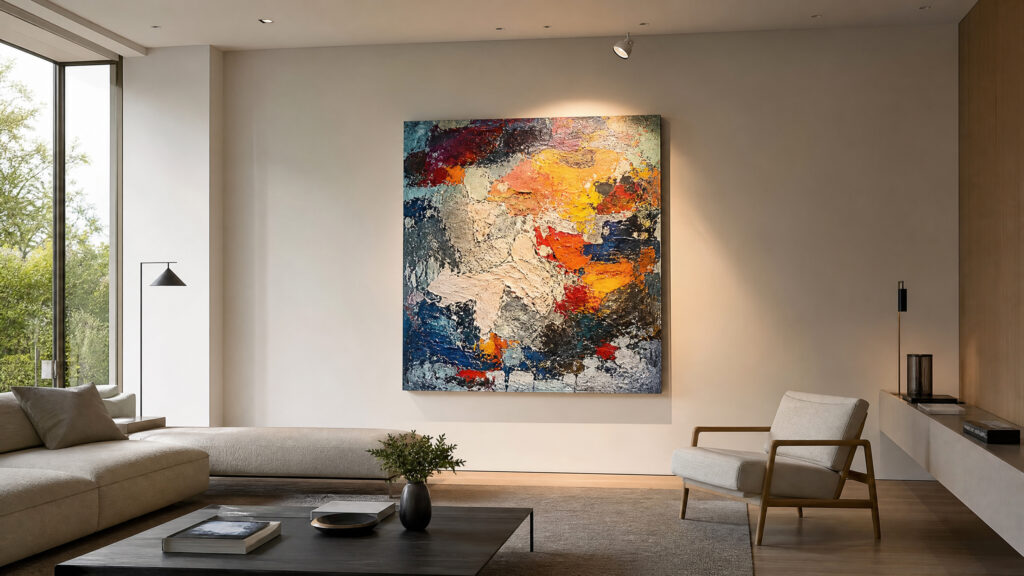
Professional art illumination is not merely about making an artwork visible; it is an intricate dance between science, art, and conservation, essential for revealing an artwork’s true essence, preserving its legacy, and profoundly shaping its perception within a curated environment. Many discerning collectors, despite investing significantly in their acquisitions, inadvertently compromise their art’s impact and longevity through inadequate lighting. Prime Vista Art is dedicated to guiding high-end collectors in mastering the principles of light, thereby elevating their cherished collections to museum-quality displays and ensuring each piece resonates with its intended brilliance.
II. The Science of Art Lighting for Collectors: Decoding the Invisible Language of Illumination
Understanding the fundamental science of Art Lighting for Collectors is the first step toward preservation is the cornerstone of effective art illumination. It allows collectors to move beyond guesswork and make informed decisions that honor both the artwork and its long-term preservation.
A. Color Rendering Index (CRI): The Truth Teller of Hues
The Color Rendering Index (CRI) is a quantitative measure of a light source’s ability to reveal the true colors of objects compared to a natural light source, such as daylight. For art, a high CRI is paramount because it directly impacts how accurately an artwork’s palette is perceived. Museum standards typically demand a CRI of 95 or higher to ensure faithful color reproduction .
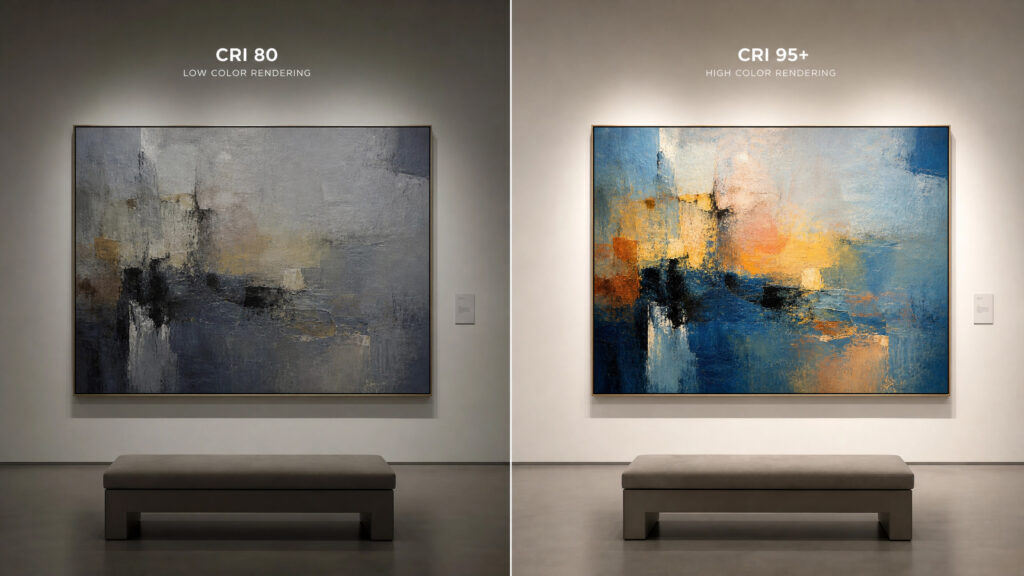
In stark contrast, most residential lighting fixtures often hover around a CRI of 80, leading to significant color distortion. Under low CRI lighting, vibrant blues can appear as muddy grays, and delicate skin tones in portraits might take on an unhealthy, jaundiced cast. The photographer’s meticulous color grading or the painter’s subtle layering of pigments can be entirely lost under an inferior spectrum, fundamentally altering the artist’s original intent .
B. Color Temperature (Kelvin): Setting the Emotional Tone
Color temperature, measured in Kelvin (K), describes the warmth or coolness of a light source. The scale can be counterintuitive: lower Kelvin values (e.g., 2700K) indicate warmer, more yellowish light, akin to candlelight, while higher values (e.g., 5000K-6500K) represent cooler, bluer light, similar to overcast skies or bright daylight .
For art display, the optimal range typically falls between 3000K and 4000K, offering a neutral balance that complements most artworks without imparting an artificial tint. However, this ideal range can vary based on the artwork’s medium, historical period, and the surrounding interior design palette. For instance, classical oil paintings often benefit from warmer light (around 2700K-3000K) to enhance their rich, earthy tones, while contemporary photography might require cooler light (4000K-5000K) to maintain color accuracy .
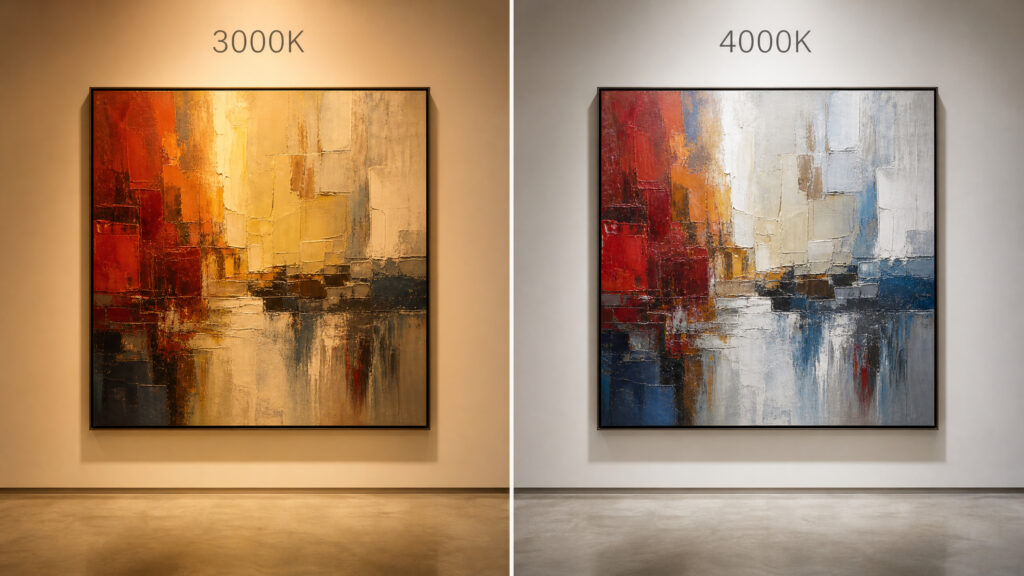
Crucially, consistency in color temperature across all light sources within a viewing area is vital. Mixing warm spots with cool ambient light creates visual chaos and an unsettling
aesthetic that detracts from the artwork. Professional lighting design accounts for chromatic adaptation, the brain’s tendency to recalibrate white points based on ambient light, ensuring that the artwork’s color relationships remain consistent regardless of viewing conditions .
C. Light Intensity (Lux): Balancing Brilliance with Preservation
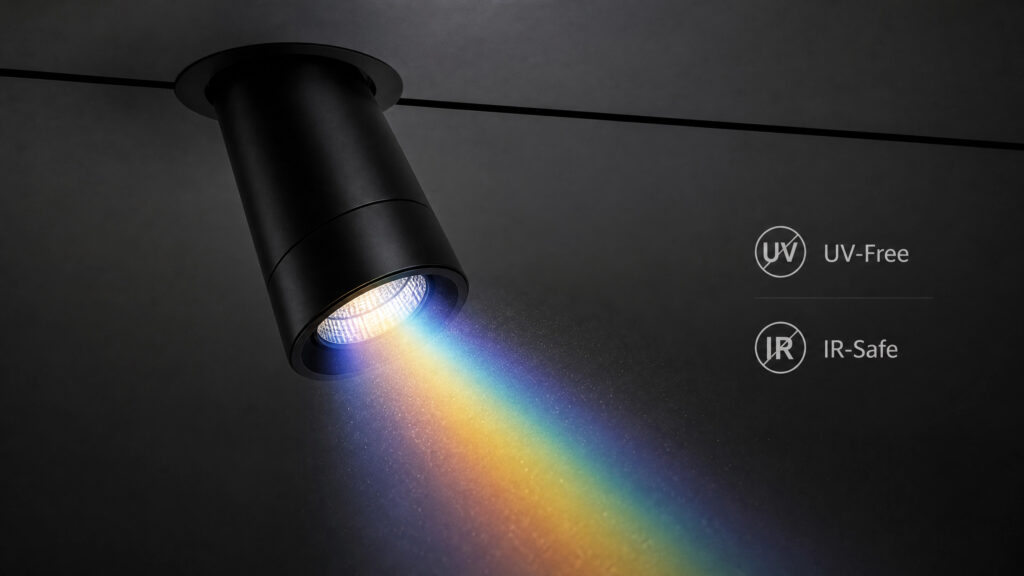
Light intensity, measured in lux (lumens per square meter), quantifies the amount of light falling on a surface. While adequate illumination is necessary for appreciation, excessive light is the primary enemy of art preservation. Every photon that reveals an artwork’s beauty also contributes to its eventual degradation. This is not alarmism but a chemical reality: ultraviolet (UV) and infrared (IR) radiation in particular break down pigments, fade photographs, and embrittle paper over time.
Museum professionals meticulously control light levels to balance visibility with conservation. General recommendations are stringent:
| Artwork Type | Maximum Recommended Lux Level [1] [2] |
|---|---|
| Oil Paintings & Acrylics | 200 lux |
| Mixed Media & Textiles | 150 lux |
| Watercolors, Photographs, Works on Paper | 50 lux |
Alarmingly, most homes drastically over-light art, with typical living rooms often exceeding 500 lux from ambient lighting alone . This continuous, high-intensity exposure significantly accelerates damage. The solution lies not in darkness, but in intelligent, focused lighting that provides adequate illumination only when needed, often through dimmable systems and motion sensors .
The advent of LED technology has revolutionized conservation lighting. High-quality LEDs can eliminate harmful UV radiation and minimize infrared heat while maintaining excellent color rendering. However, a crucial distinction must be made: not all LEDs are created equal. Cheap LEDs can exhibit unstable spectral output and rapid degradation, making them conservation nightmares. Investment in museum-quality LED systems, characterized by high CRI (95+), stable drivers, and proven UV-free output, offers significant dividends in artwork longevity and energy efficiency .
III. The Art of Placement: Choreographing Light for Dramatic Effect
When considering Art Lighting for Collectors, the strategic placement of each fixture transforms the viewing experience, its strategic placement transforms a static object into a dynamic visual experience. This is where the art of lighting design truly comes into play, choreographing light to highlight form, texture, and narrative.
A. The Fundamental Rule: The 30-Degree Angle
The cornerstone of professional art lighting is the 30-degree rule: light should strike the artwork at an angle of approximately 30 degrees from vertical. This precise angle is critical for two reasons: it effectively minimizes surface reflection and glare, and it ensures even illumination across the artwork.
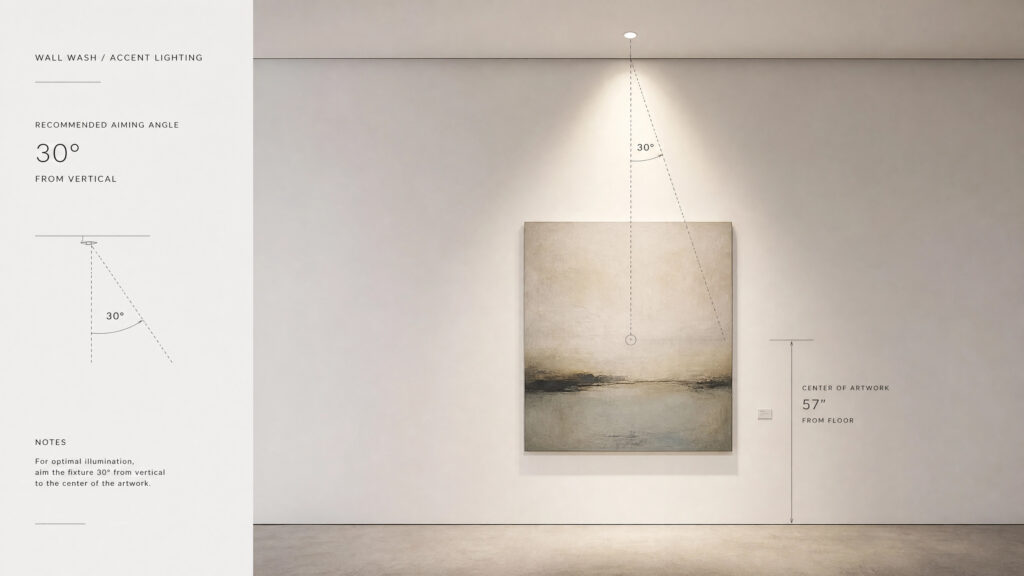
Deviations from this rule can have significant consequences: steeper angles tend to create undesirable shadows, while shallower angles can lead to distracting glare. For highly textured works, such as impasto paintings, a slightly shallower angle of 25 degrees can be employed to enhance dimensionality and reveal intricate brushwork .
B. Fixture Hierarchy: Tools of the Trade
Selecting the appropriate lighting fixtures is paramount, balancing aesthetic integration with functional performance and conservation needs. The modern lighting landscape offers a sophisticated array of tools:
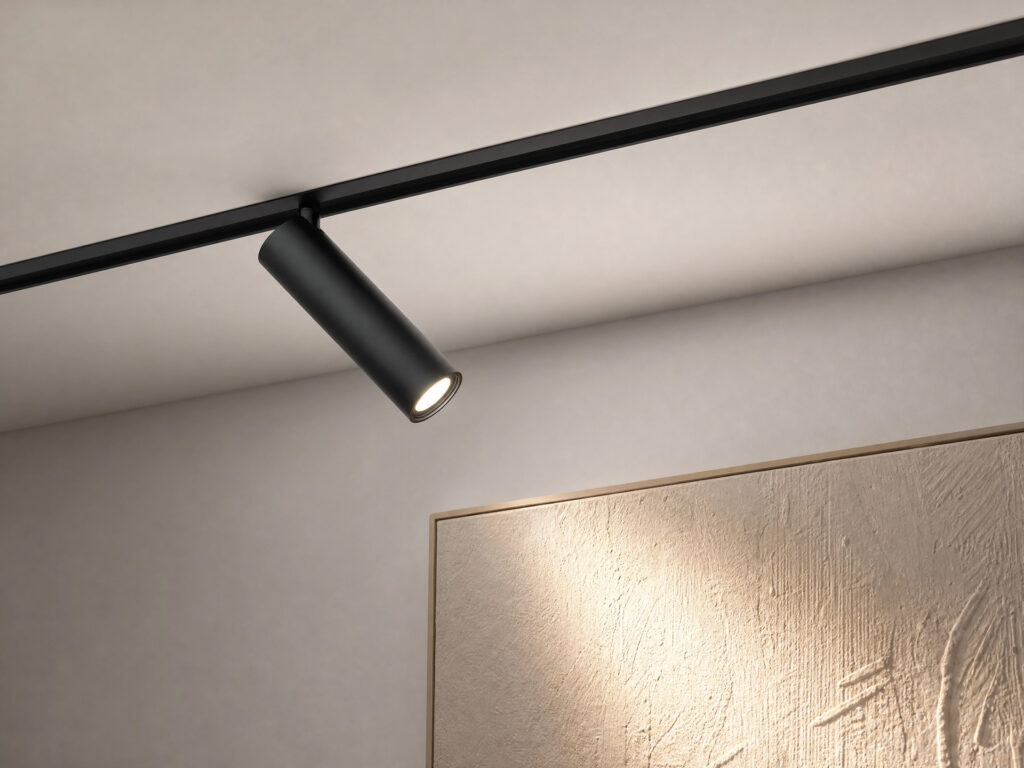
•Track Lighting: Renowned for its versatility and flexibility, track lighting allows for adjustable fixture positions, changeable beam angles, variable color temperatures, and smart controls. It is an ideal choice for evolving collections or gallery walls where adaptability is key. However, investing in professional-grade tracks with rigid mounting is essential to prevent the common issue of sagging over time .
•Picture Lights: These fixtures offer a traditional elegance and provide individual illumination for a single piece. Modern LED picture lights deliver even coverage without emitting excessive heat, which is crucial for conservation. Proper sizing is critical: the fixture should extend to 65-75% of the frame width to ensure uniform illumination and avoid dark edges or an ungainly appearance .
•Recessed Lighting: For a clean, architectural aesthetic, recessed lighting serves as a precision tool. Adjustable LED downlights with narrow beam spreads can highlight artwork while remaining virtually invisible. When positioning recessed lights, the 30-degree rule is applied by measuring from the wall to determine the ceiling point that creates the optimal angle to the artwork’s center .
•Wall Washing: This technique involves illuminating entire walls rather than individual pieces, creating a luminous background that is particularly effective for dense arrangements or contemporary installations where art and architecture merge. Wall washers are typically positioned using a 1:3 ratio (for every foot of distance from the wall, expect three feet of coverage height) to achieve remarkably even illumination .
C. Techniques for Luxurious Art Lighting
Beyond basic fixture selection, specific techniques are employed to achieve a truly luxurious and impactful art display:
•Accent Lighting: This involves the precise aiming of adjustable fixtures to emphasize specific details or areas of an artwork. Directional lighting is particularly effective for sculptures or paintings with intricate textures, drawing the viewer’s eye to key features. Grazing, where light fixtures are placed at a low angle to the artwork’s surface, enhances texture and three-dimensional qualities, creating dramatic shadows and depth .
•Glare Control: To ensure an unobstructed viewing experience, minimizing glare and reflections is paramount. This can be achieved through the use of anti-glare lenses or specialized glass on framed artworks, as well as light shields and louvers on fixtures to control light direction and prevent direct light from hitting the viewer’s eyes .
•Shadowless Lighting: For delicate artworks sensitive to heat and light, soft, diffused lighting techniques are employed. Frosted or diffusing lenses on fixtures create a shadowless and even illumination that is gentle on the art, preventing harsh contrasts and potential damage .
•Specialized Lighting for Different Art Forms: Sculptures often require multiple light sources and a three-point lighting system (key light, fill light, and optional accent light) to fully reveal their form and texture . For textile and fabric art, gentle and even illumination is essential, often achieved with fiber optic lighting due to its low heat emission .
•Texture Illumination: To truly reveal the third dimension of an artwork, raking light—positioned to skim artwork surfaces at an acute angle (15-20 degrees from vertical)—dramatically reveals texture, such as the brushwork and impasto of a painting. This creates shadows that define each stroke, bringing the artwork to life .

IV. Control Systems: Orchestrating the Light Experience
Static lighting is a relic of the past. Modern, professional art installations demand nuanced control, allowing for adjustments in intensity, color, and timing to match activities, moods, and the evolving nature of a collection. This orchestration transforms lighting from a utility into an integral part of the art experience.
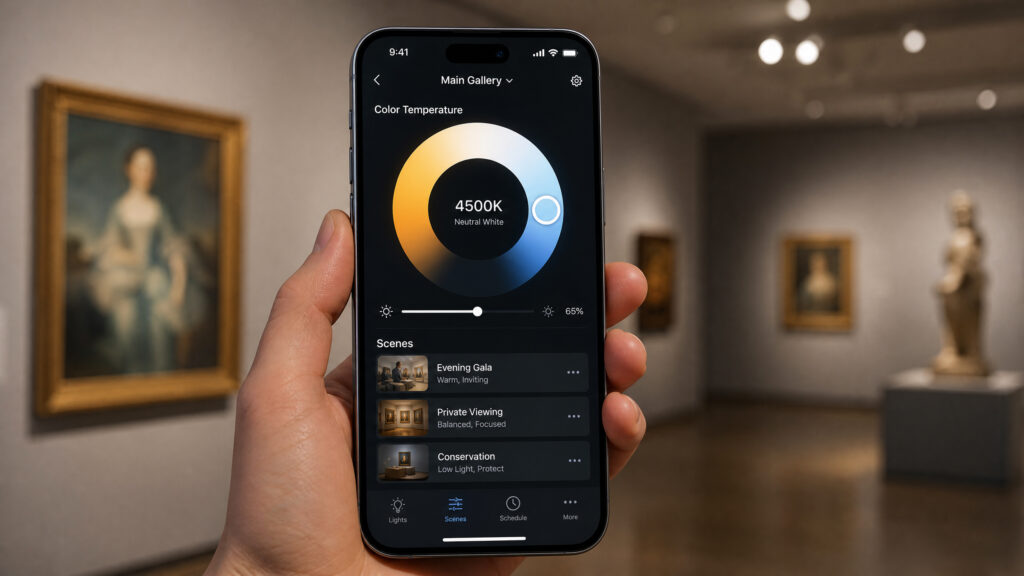
A. Dynamic Dimming and Tunable White
•Dimming: Smooth, high-quality dimming systems offer 0-100% control over light intensity. It is crucial to specify fixtures with quality dimming drivers to avoid flickering or sudden drops in light output. Compatibility across multiple manufacturers’ fixtures is also a key consideration to prevent unexpected behaviors .
•Tunable White LEDs: These advanced fixtures allow for the adjustment of color temperature from warm (e.g., 2700K) to cool (e.g., 5000K). This flexibility enables collectors to optimize the lighting for different artworks or to adapt to changing ambient conditions throughout the day, ensuring the art always looks its best .
To ensure your artwork is perfectly proportioned before lighting, consult our [wall art size calculator] for expert scaling advice.
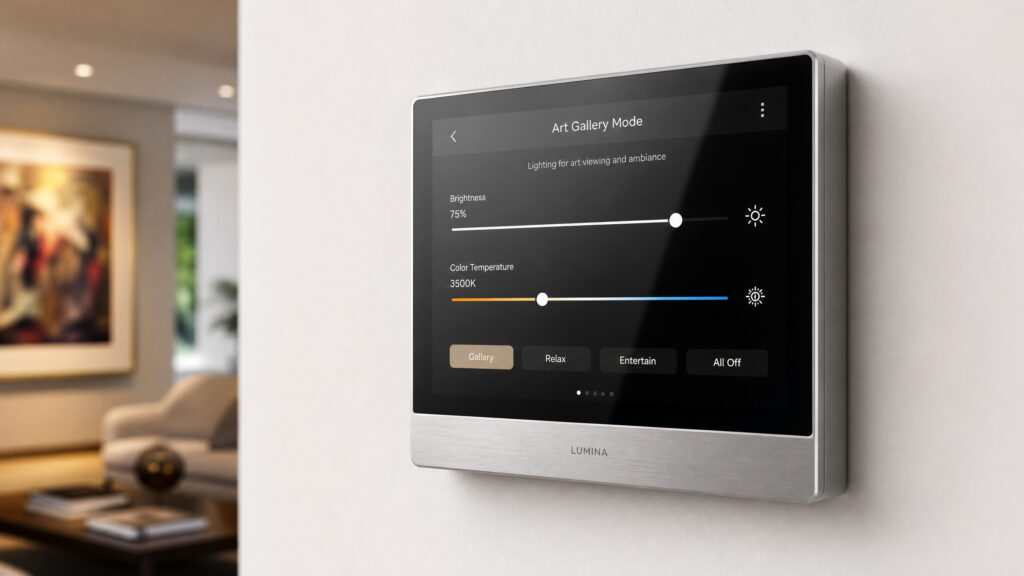
B. Smart Integration: Art in the Connected Home
Smart integration elevates art lighting to an immersive experience. Modern systems seamlessly integrate with home automation platforms, allowing for the creation of dynamic lighting scenes. For example, a
“Gallery mode” might brighten art lights while simultaneously dimming ambient fixtures, creating a focused viewing environment. A “Party mode” could subtly rotate through different color temperatures, making the artwork feel fresh and engaging for guests. The convenience of voice control further enhances this experience, allowing for effortless adjustments without the need for physical switches .
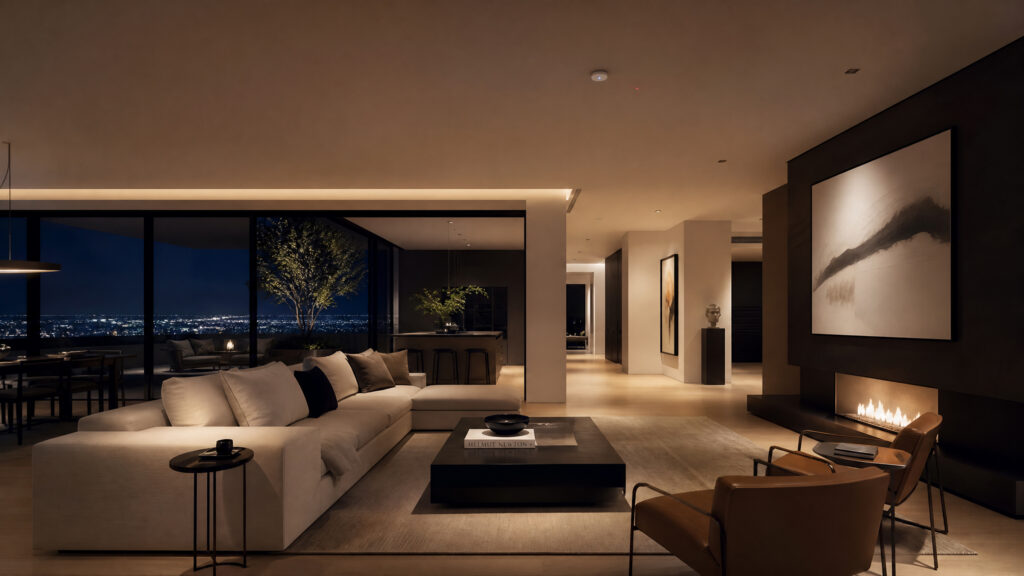
V. Application Excellence: Room-by-Room Strategies for the Discerning Collector
The application of art lighting must be tailored to the specific function and atmosphere of each room. A one-size-fits-all approach fails to account for the nuances of daily living and the varied ways we interact with art in different spaces.
A. Living Spaces: Balancing Art and Life
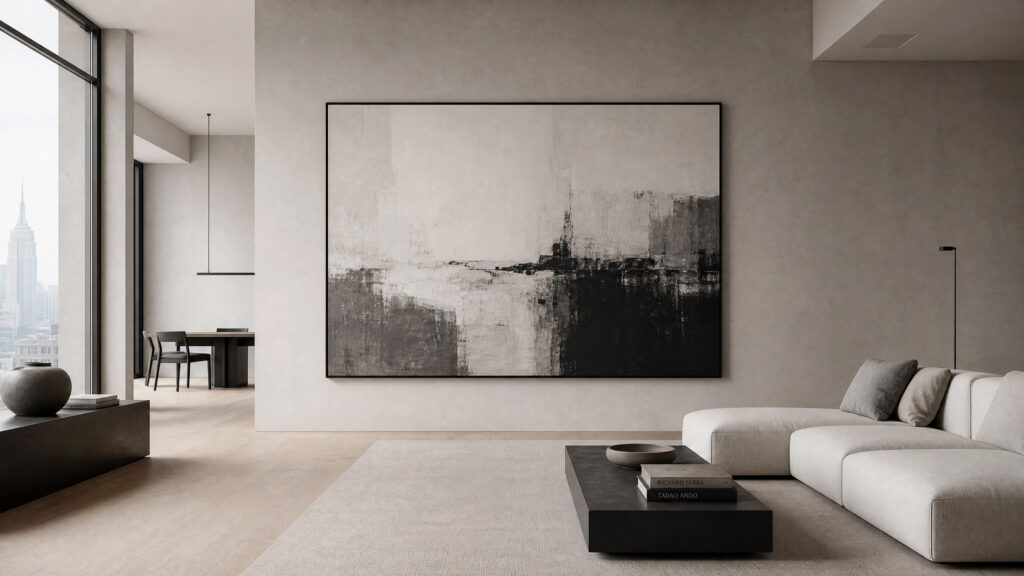
Living rooms demand a sophisticated layering of light, as they must serve multiple functions—from entertaining guests to quiet reading—while simultaneously showcasing art. The key is to establish distinct lighting zones. Primary seating areas require warm, dimmable ambient light (typically 2700K-3000K) that provides comfort without washing out the artwork. Ceiling-mounted fixtures should incorporate glare shields to prevent direct views of bulbs from seated positions .
Accent lighting for living room art requires finesse. The differential between ambient and accent lighting should range from 3:1 to 5:1, providing enough contrast to highlight the art without creating a harsh spotlight effect. Furthermore, managing natural light is critical. UV-filtering window treatments, automated shades linked to light sensors, or even electrochromic glass that tints automatically can protect art from damaging sunlight while maintaining views and natural ambiance .
B. Private Retreats: Bedroom and Study Lighting
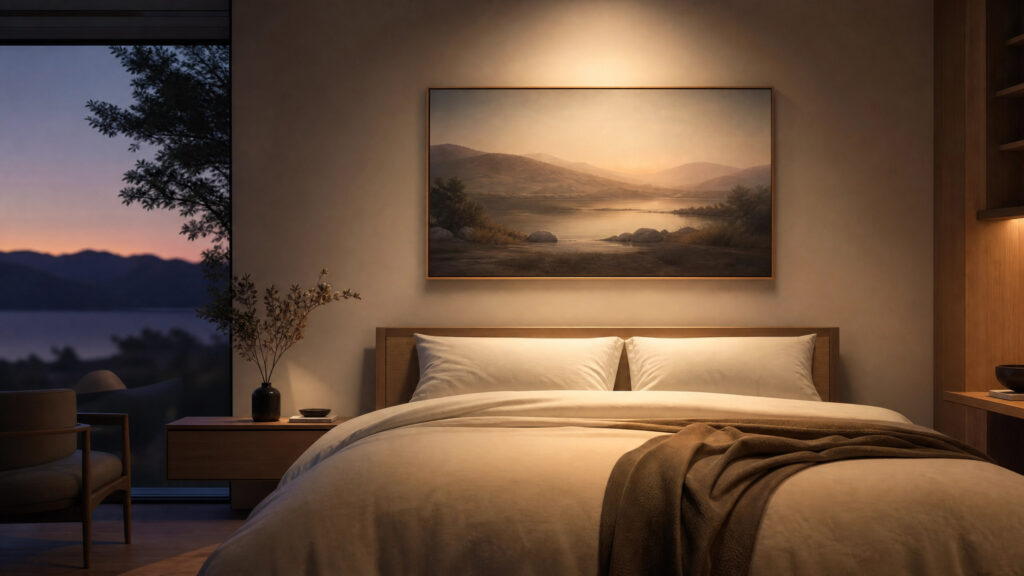
In bedrooms, the psychology of light shifts; art serves contemplation and relaxation rather than public display. The lighting should enhance the space without energizing it, creating a sanctuary. This necessitates warmer color temperatures (2700K-3000K) to align with circadian rhythms and promote biological comfort. Tunable fixtures are ideal here, allowing for true color display when desired but defaulting to warmer tones for relaxation .
Control placement is also critical in private retreats. Bedside switches should control art lighting, allowing for appreciation without leaving the bed. However, bright indicator lights on switches should be avoided, as they can disrupt sleep. In studies and home offices, art must inspire without distracting from productivity. Lighting should be positioned to avoid reflections on computer screens, and bias lighting behind monitors can indirectly illuminate surrounding art, reducing eye strain while maintaining visual interest .
C. Transitional Zones: Hallways and Stairs
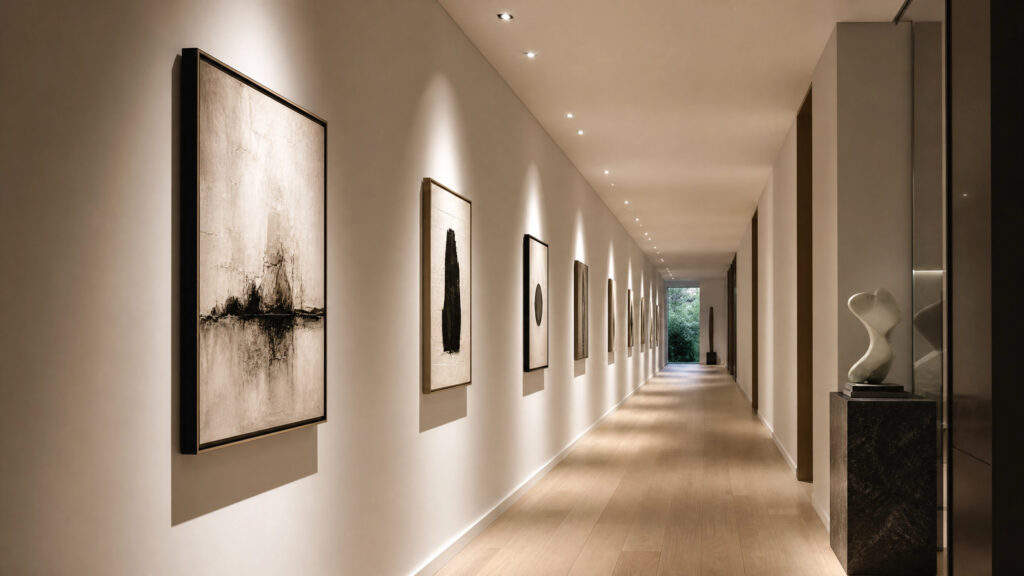
Corridors and stairways offer unique opportunities for dramatic lighting, transforming mundane passages into engaging gallery experiences. Rather than uniform wall washing, hallway lighting should create visual rhythm by alternating bright and dim zones that guide movement and create interest. For artwork series, maintaining consistent spacing between lights—even if it differs from frame spacing—can establish a compelling visual cadence .
Stairway lighting demands a careful balance between safety and aesthetics. Art along stair walls benefits from steeper lighting angles to prevent glare when ascending. Installing separate circuits for navigation and art lighting allows for subtle step lighting for safety while enabling art lights to dim for dramatic effect. Advanced installations might even incorporate pressure sensors that subtly brighten art as viewers approach each landing .
VI. Implementation and Evolution: From Planning to Perfection
The journey to perfect art lighting begins long before the first fixture is purchased. It requires comprehensive planning, precise installation, and ongoing maintenance to ensure lasting satisfaction and the continued protection of the collection.
A. The Planning Process: Designing Your Lighting Scheme
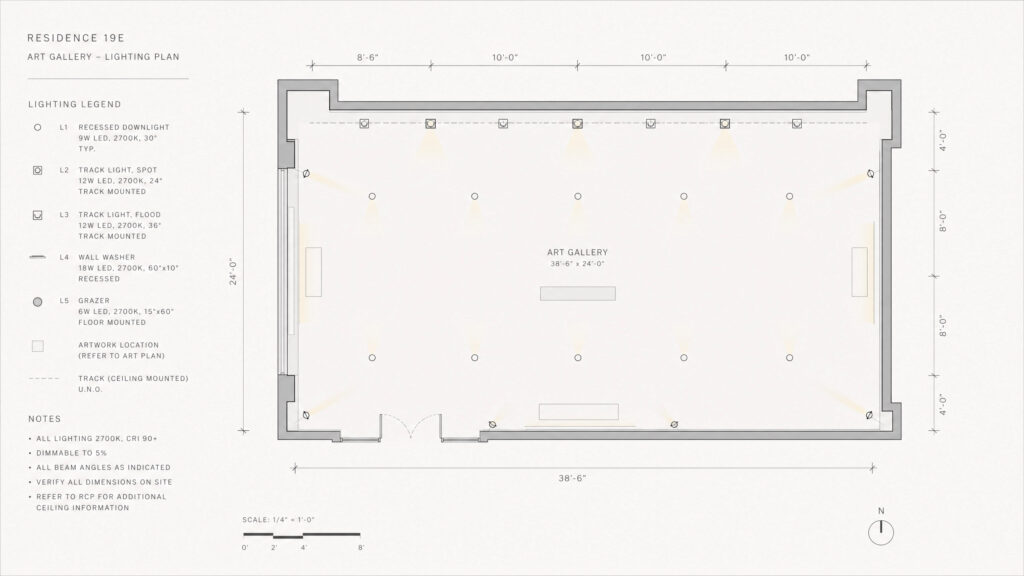
A successful lighting scheme starts with a thorough lighting audit. This involves documenting natural light patterns throughout the day, measuring ambient light levels, and photographing art under current conditions to identify problem areas. Following the audit, a detailed lighting plot—a scaled drawing showing art placement, proposed fixtures, viewing positions, and traffic patterns—should be created. This crucial step helps calculate throw distances and beam spreads, revealing potential issues like insufficient ceiling space or beam conflicts before installation begins .
Furthermore, considering infrastructure requirements early is essential. Quality lighting demands adequate electrical capacity, and planning for control wiring (whether simple dimmers or complex automation systems) determines the possibilities for future flexibility and integration .
B. Installation Excellence: Professional Techniques
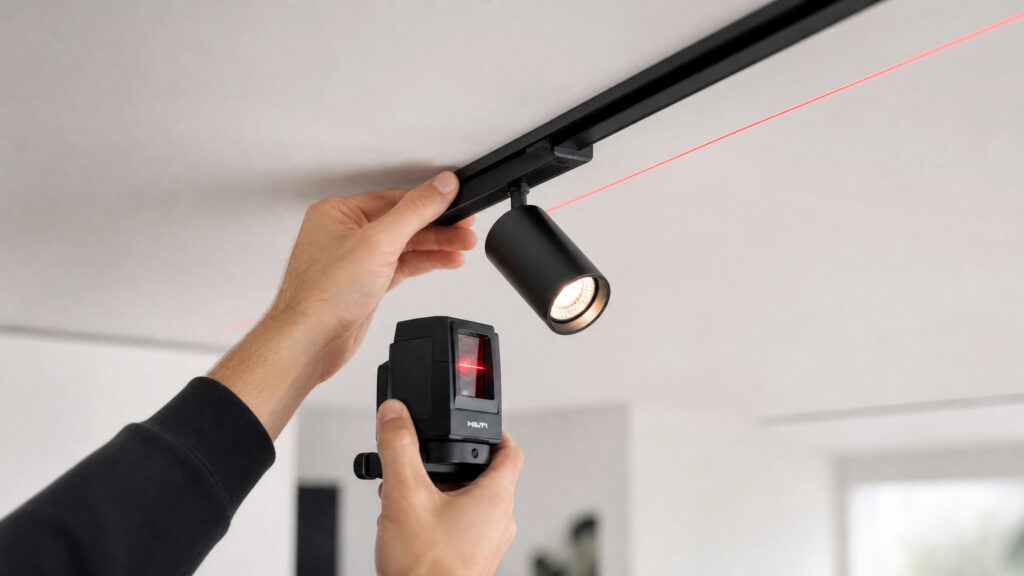
Even with the best planning, the difference between an amateur and professional installation often lies in the execution of seemingly minor details. Precise fixture positioning is critical; using laser levels ensures consistent mounting heights, and installation templates guarantee uniform spacing. For recessed fixtures, using professional hole saws prevents ceiling damage and ensures proper seating .
Wire management is another hallmark of professional installation. Exposed cords detract significantly from the aesthetic. Planning wire routes during installation, using proper gauge wire to prevent voltage drop, and ensuring accessible junction boxes are all essential practices. Finally, commissioning—the process of fine-tuning the entire system, adjusting beam angles, setting dimmer levels, and balancing multiple fixtures—transforms a technical installation into a curated art experience .
C. Living with Light: Maintenance and Evolution
The best lighting systems are not static; they evolve with the collection and the collector’s lifestyle. Regular maintenance is vital for preserving both performance and artwork protection. Dust accumulation reduces light output and can shift color temperature, so quarterly fixture cleaning is recommended. Additionally, checking the aim of fixtures annually ensures they haven’t shifted due to building settling or wear .
A proactive lamp replacement strategy is also crucial. LEDs gradually dim and shift color over time. Replacing lamps at 70% of their rated life maintains output and color consistency. When replacing, it’s best to change all fixtures in a room simultaneously to avoid a patchwork of different light qualities. Finally, evolution planning future-proofs the investment. Specifying systems with expansion capacity and considering how artwork rotation will affect lighting needs ensures the system remains adaptable and effective as the collection grows .
VII. Conclusion: The Enduring Legacy of Illuminated Art
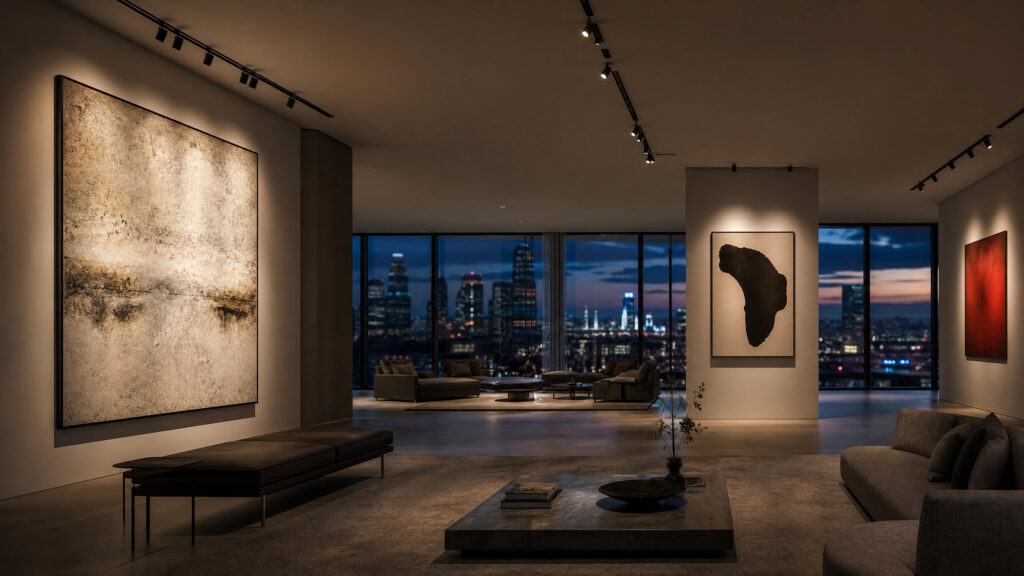
The intersection of light and art creates a profound magic—but it is a magic grounded in rigorous science, executed with meticulous precision, and maintained with dedicated care. Light acts as the silent curator of your collection, the invisible frame that presents each piece to its absolute best advantage. By mastering the principles of illumination, investing in quality implementation, and adhering to conservation standards, collectors ensure that their artwork truly lives, rather than merely hangs. In doing so, they transform their spaces into environments that inspire, protect their investments for future generations, and experience the daily, profound pleasure of seeing their collection exactly as the artist intended.
VIII. Frequently Asked Questions (FAQ)
Q1: What is the ideal color temperature for displaying artwork at home?
A: The ideal temperature depends on the artwork and room function. For versatile display, 3500K-4000K provides neutral illumination. Oil paintings often benefit from warmer 2700K-3000K light, while contemporary photography may require cooler 4000K-5000K. Consistency is key; mixing temperatures creates visual chaos. Tunable white fixtures offer the ultimate flexibility.
Q2: How bright should lights be to properly illuminate artwork without causing damage?
A: Light levels must balance visibility with conservation. General guidelines recommend a maximum of 200 lux for oil paintings and acrylics, 150 lux for mixed media, and 50 lux for works on paper and photographs. Use dedicated, dimmable art lighting to control exposure and avoid the high ambient light levels (often 500+ lux) typical in many homes.
Q3: What is the difference between track lighting, picture lights, and recessed lighting for art?
A: Track lighting offers maximum flexibility and expandability, ideal for evolving collections. Picture lights provide traditional elegance and individual control but can cast shadows on textured works. Recessed lighting creates a clean, architectural look but requires precise planning and ceiling access. Many sophisticated installations combine these systems for optimal results.
Q4: Do LED lights really protect artwork better than traditional bulbs?
A: Yes, high-quality LEDs offer superior protection by eliminating UV emission and minimizing infrared heat, while providing stable color temperature and dimmability. However, it is crucial to specify museum-quality LEDs with a CRI of 95+ and proven UV-free output, as cheap LEDs can be detrimental to art preservation.
Q5: How do I light a gallery wall without creating a cluttered ceiling of fixtures?
A: Use wider beam angles (35-40 degrees) to create overlapping pools of light, or employ wall washing techniques to evenly illuminate the entire wall. Position track lights in clean lines and consider adjustable recessed fixtures that blend architecturally. The goal is to light the composition as a whole, adding narrow spots only for special emphasis.