

I. Introduction: The Scale of Emotion
In the realm of high-end art collection, the impact of a masterpiece is often measured not just by its provenance, but by its physical presence. The Neuroaesthetics of Large-Scale Art is a burgeoning field that explores how our brains respond to the sheer scale of visual stimuli. For the discerning collector, living with large-scale art is more than an aesthetic choice; it is a neurological intervention that reshapes the mental landscape of the home.
The true value of a large-scale work resides in its ability to bypass the analytical mind and speak directly to the limbic system—the brain’s emotional core. This article delves into the scientific principles of The Neuroaesthetics of Large-Scale Art, revealing how size, immersion, and visual dominance influence our well-being, creativity, and sense of self.
II. The Science of Immersion: Visual Field and the Limbic System
A. Visual Dominance and the “Awe” Response
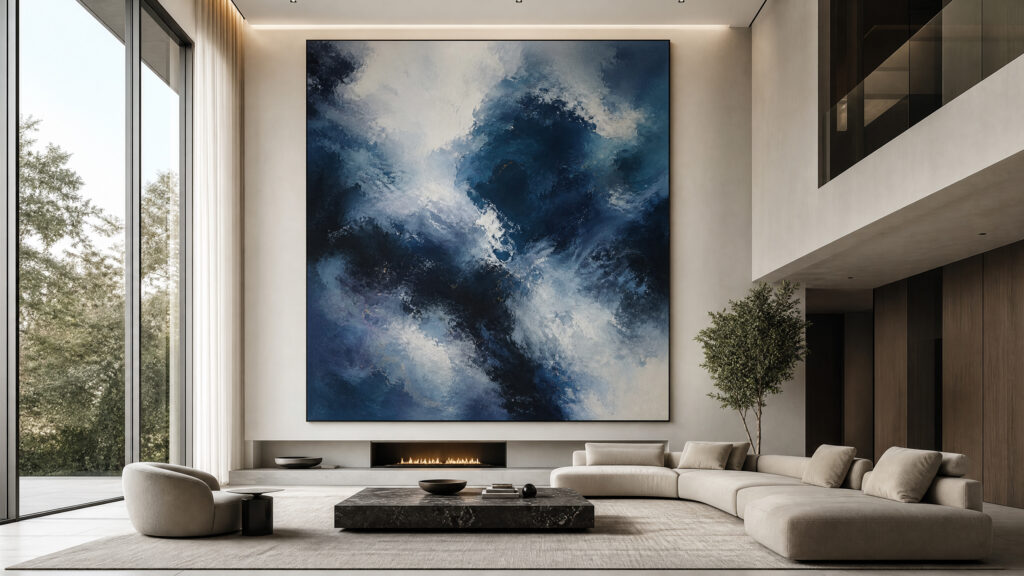
When an artwork occupies a significant portion of our visual field, it triggers what neuroscientists call an “awe” response. The Neuroaesthetics of Large-Scale Art suggests that massive canvases mimic the vastness of natural landscapes—vast horizons, towering mountains, or the endless sea. This perceived vastness activates the brain’s “awe” circuitry, which has been shown to reduce inflammation and lower levels of cortisol, the primary stress hormone.
B. The Default Mode Network (DMN) and Self-Reflection
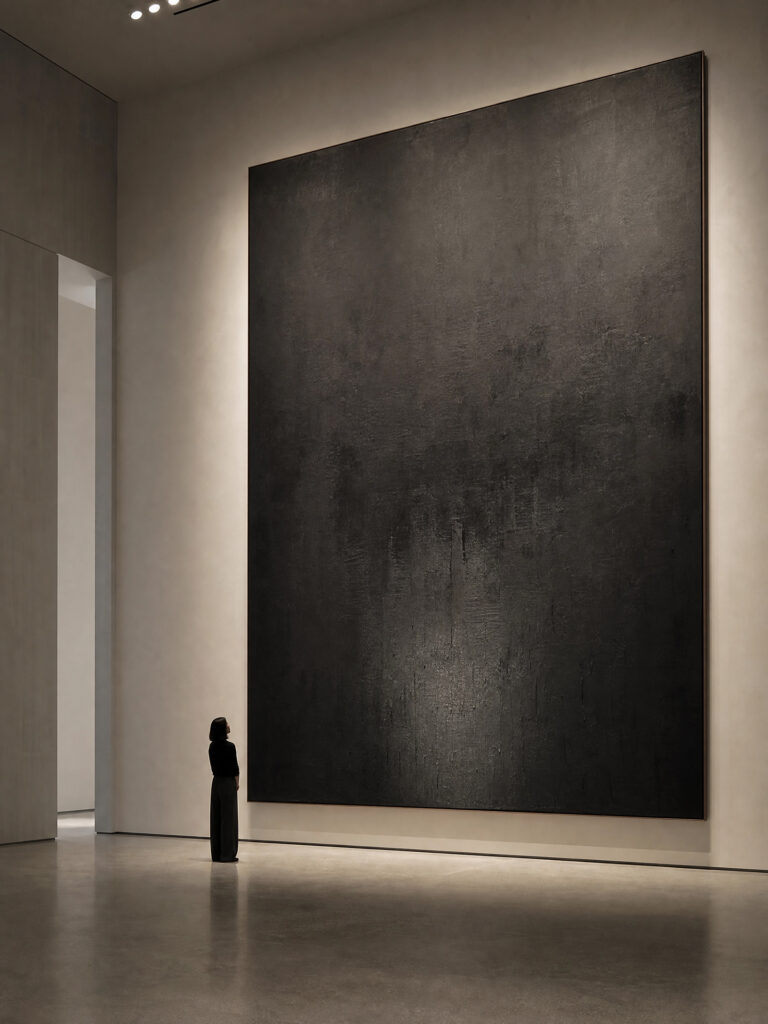
Recent fMRI studies have shown that viewing art we find moving engages the Default Mode Network (DMN). This network is typically active during introspection, daydreaming, and self-reflection. The Neuroaesthetics of Large-Scale Art indicates that large works, by virtue of their immersive quality, are particularly effective at activating the DMN, allowing the viewer to “lose themselves” in the work while simultaneously gaining a deeper connection to their own internal narrative.

III. The Psychology of Space: Proportion and Presence
A. Visual Anchor and Cognitive Order
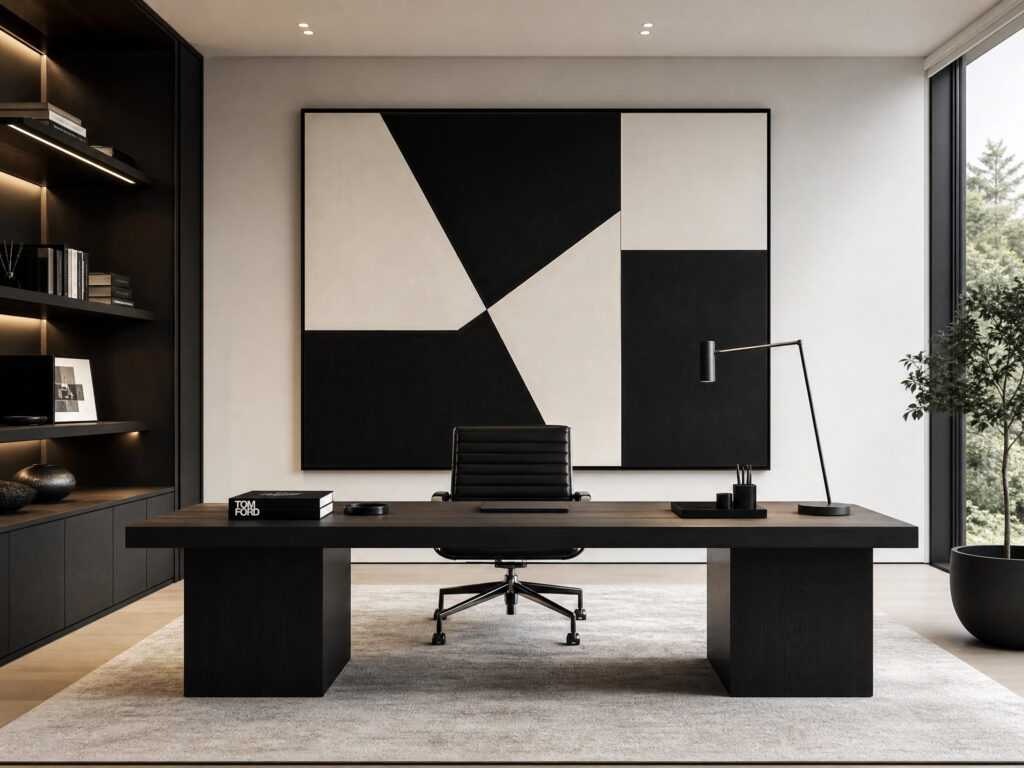
A large-scale artwork serves as a powerful visual anchor in an architectural space. From the perspective of The Neuroaesthetics of Large-Scale Art, this anchor provides a sense of cognitive order. In a minimalist environment, a single, dominant piece reduces visual clutter and allows the brain to focus, fostering a state of “flow” and enhancing cognitive clarity.
B. The “Safe Harbor” Effect
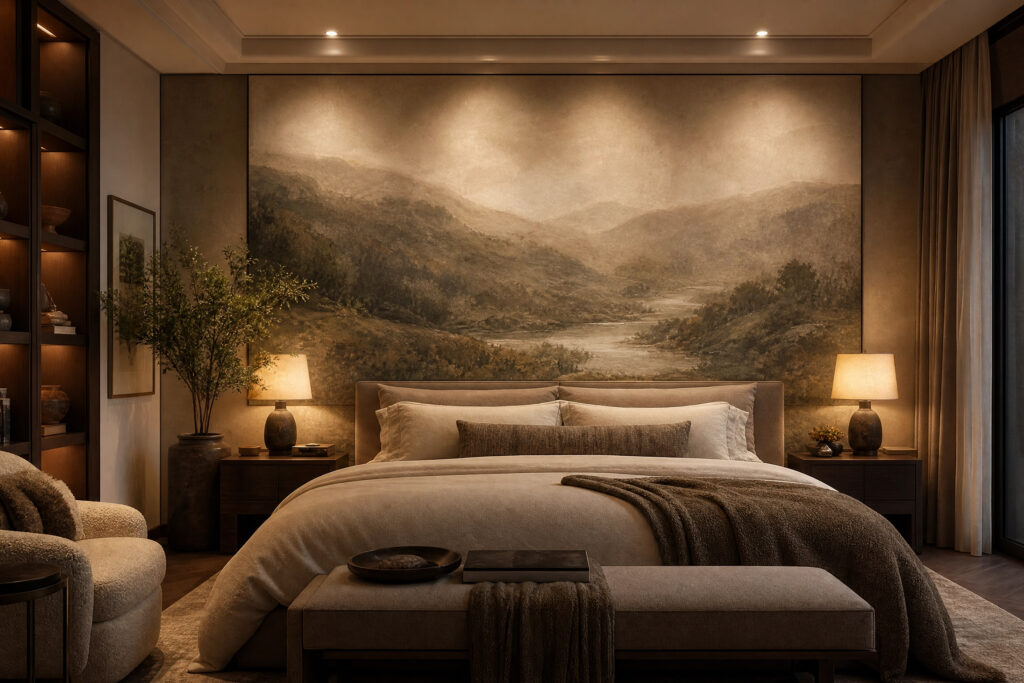
Psychologically, large artworks can create a “safe harbor” effect. By dominating the visual environment, they define the boundaries of a space, making it feel more secure and contained. This is a core principle of The Neuroaesthetics of Large-Scale Art: the larger the work, the more it can dictate the “emotional temperature” of the room.
IV. Color, Texture, and the Autonomic Nervous System
A. Chromatic Immersion
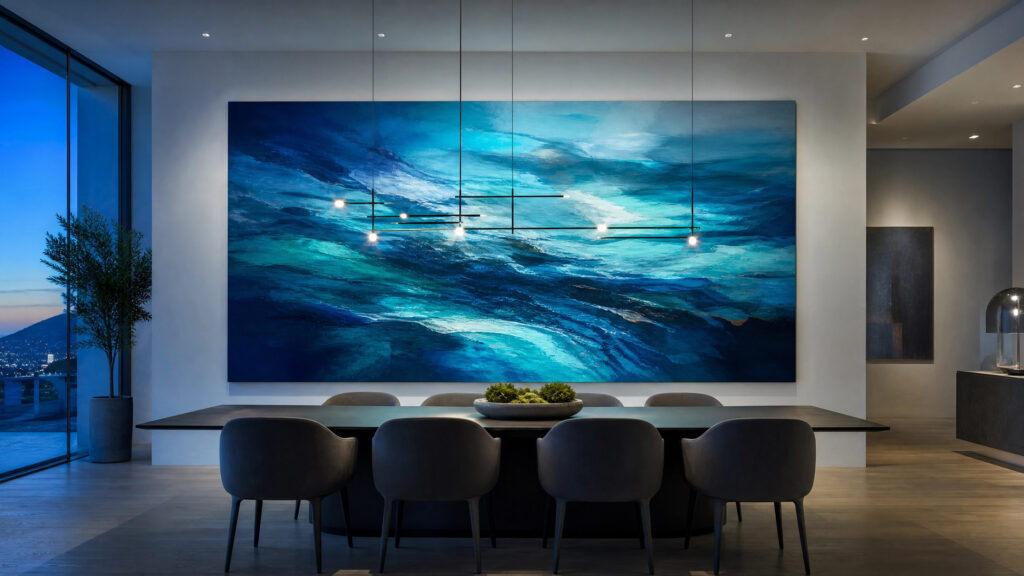
In The Neuroaesthetics of Large-Scale Art, color is not just a decorative element; it is a physiological trigger. Large-scale works allow for “chromatic immersion,” where the viewer is literally bathed in a specific wavelength of light. Blue-heavy large-scale works have been shown to lower heart rates, while vibrant reds and oranges can stimulate dopamine production and increase energy levels. To explore contemporary works that leverage these psychological effects, platforms like [Saatchi Art] provide access to an extensive range of large-scale masterpieces for discerning collectors.
B. Tactile Resonance
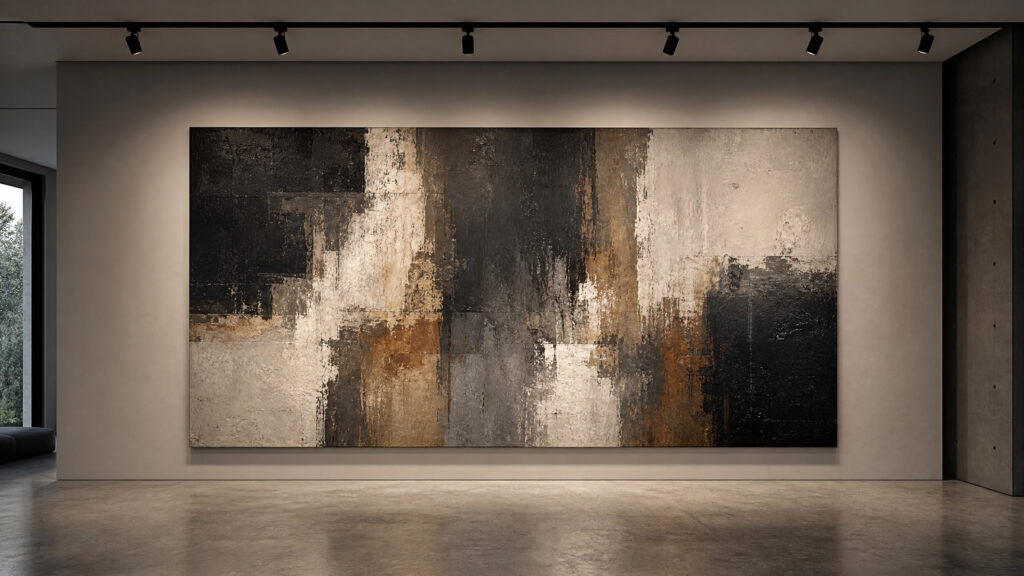
The texture of a large-scale work—the visible brushstrokes, the impasto layers, the weave of the canvas—triggers “tactile resonance” in the brain. Even without touching the work, our mirror neurons simulate the sensation of touch, creating a deeper, more visceral connection to the artist’s process. This is a vital component of The Neuroaesthetics of Large-Scale Art.

V. Practical Considerations for High-End Collectors
A. Curating for Wellness
For collectors, implementing The Neuroaesthetics of Large-Scale Art means curating for wellness. It involves understanding how the scale and color of a piece will interact with the specific function of a room. A high-energy workspace might benefit from a large, vibrant abstract, while a private library might require a more contemplative, monochromatic monumental work.

B. Lighting and Scale
To maximize the impact of The Neuroaesthetics of Large-Scale Art, lighting must be precise. As discussed in our guide on [Art Lighting for Collectors], the way light falls across a large surface can either enhance its immersive quality or create distracting glares. Proper illumination is essential for revealing the depth and texture that trigger neurological responses.
VI. Conclusion: The Art of Living Well
The dialogue between our minds and the art we live with is a continuous, silent conversation. The Neuroaesthetics of Large-Scale Art proves that the size of a work is not merely a matter of prestige; it is a matter of profound psychological and physiological impact. By choosing to live with large-scale art, collectors are not just decorating their homes—they are curating their own mental well-being.
Ultimately, the goal of The Neuroaesthetics of Large-Scale Art is to create a holistic environment where the boundaries between architecture, art, and the self dissolve, leading to a more inspired, peaceful, and meaningful life.
VII. Frequently Asked Questions (FAQ)
Q1: Does a large-scale artwork make a small room feel smaller?
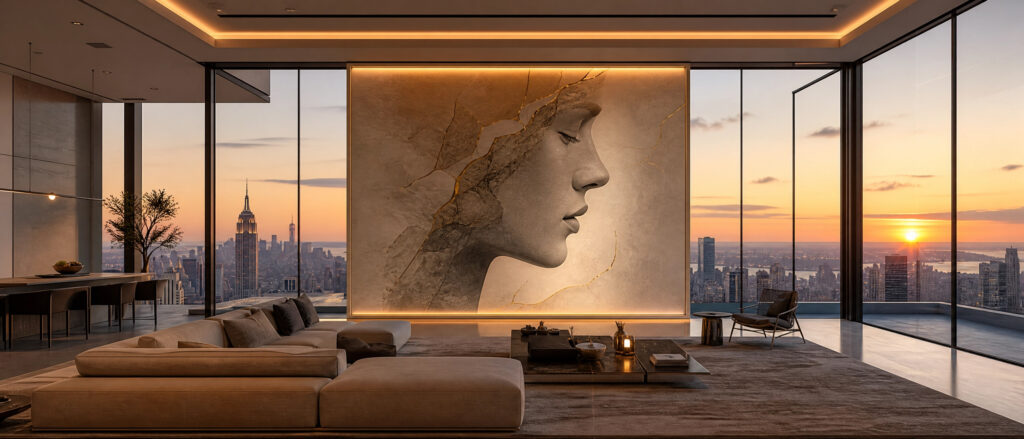
A: Counter-intuitively, within the framework of The Neuroaesthetics of Large-Scale Art, a single large-scale piece can actually make a small room feel more expansive by providing a deep visual focal point and reducing visual “noise.”
Q2: How do I choose the right color for a large-scale piece to improve my mood?
A: To leverage The Neuroaesthetics of Large-Scale Art, consider the room’s purpose. Blues and greens are ideal for relaxation, while yellows and reds are better for stimulating creativity and social interaction.
Q3: Is the impact of scale the same for digital art?
A: Yes. Large-scale digital displays also trigger The Neuroaesthetics of Large-Scale Art responses, provided the resolution and color accuracy are high enough to maintain a sense of realism and immersion.
Q4: How can I ensure the scale of the art is correct for my wall?
A: For expert advice on scaling and proportion, we recommend using our [wall art size calculator] to ensure your large-scale piece fits perfectly within your architectural context.