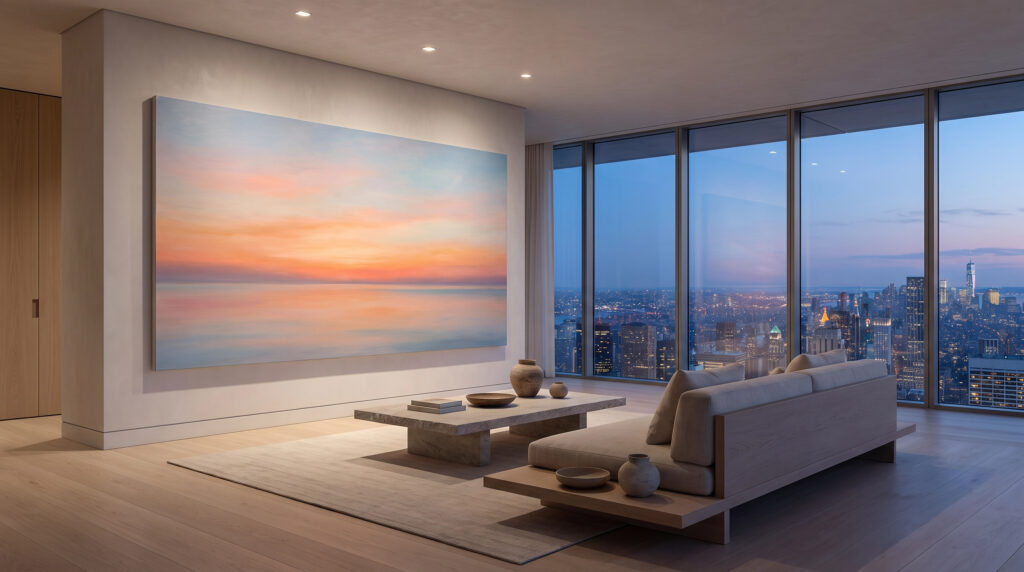

Art as an Emotional Sanctuary is more than just an aesthetic trend; it is a biological necessity in our modern, high-stress world. While architecture provides the structure, it is the art within that provides the soul. At Prime Vista Art, we believe that a curated home is more than an aesthetic achievement—it is an emotional sanctuary.
Recent breakthroughs in neuroaesthetics—the scientific study of the neural bases for the contemplation and creation of a work of art—reveal that viewing art triggers the same surge of dopamine as falling in love. It isn’t just decoration; it is a biological recalibration. At Prime Vista Art, we believe that Art as an Emotional Sanctuary is more than an aesthetic achievement—it is a biological necessity.
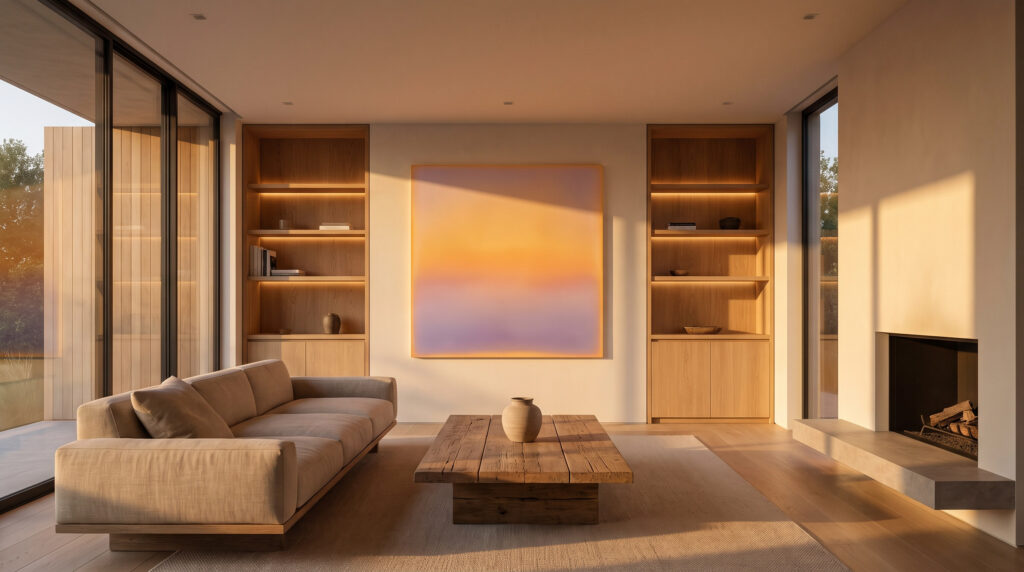
1. The Visual Anchor: Why We Need Art as an Emotional Sanctuary
The modern world is a storm of information. When you enter your home, your brain requires a “visual anchor” to signal the transition from the chaotic exterior to the tranquil interior. A large-scale minimalist painting serves this purpose perfectly. By providing a single, sophisticated point of focus, it allows the prefrontal cortex to rest, reducing the cognitive load that leads to burnout.
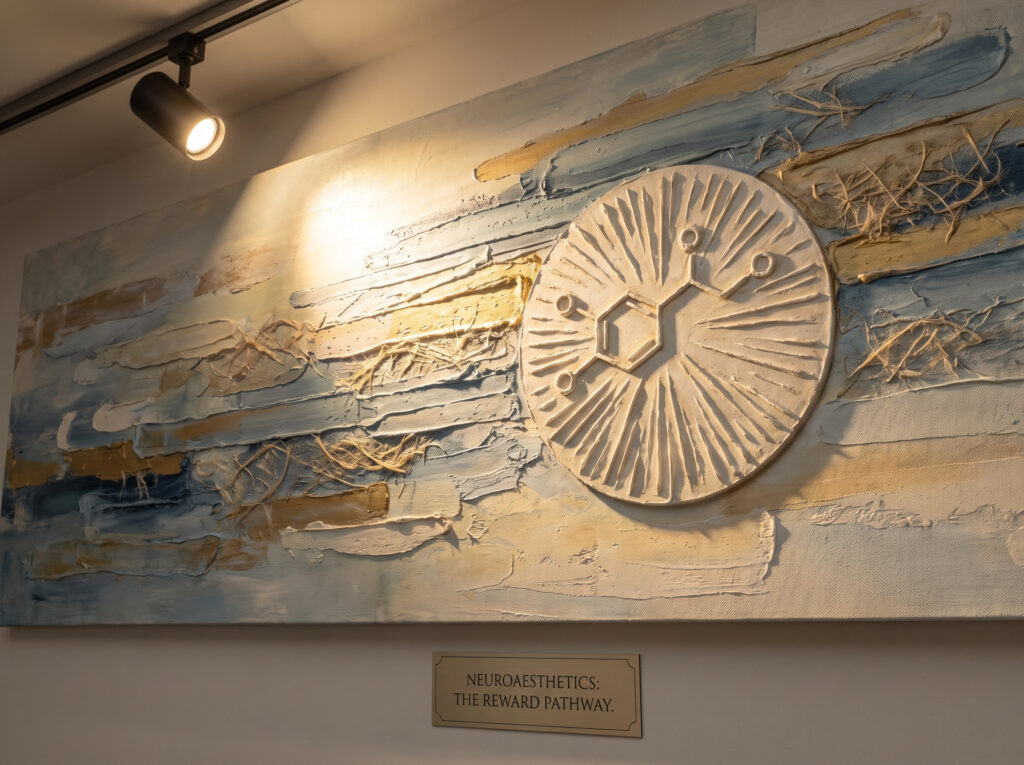
2. Neuroaesthetics: The Brain’s Reward System
Why does a specific texture or a particular shade of blue make us exhale? According to research published by the American Psychological Association, aesthetic experiences activate the brain’s reward circuitry. When we engage with art that resonates with us, our brains release oxytocin and serotonin, the chemical foundations of trust and contentment.
3. The Entryway Ritual: Decompressing at the Threshold
The first ten seconds after you walk through your front door define your evening. An “entryway sanctuary”—a carefully placed piece of art in a minimalist foyer—acts as a psychological filter. It strips away the stress of the commute and the office, replacing it with a sense of architectural calm. This is the first step in Interior Transformations that prioritize mental well-being.
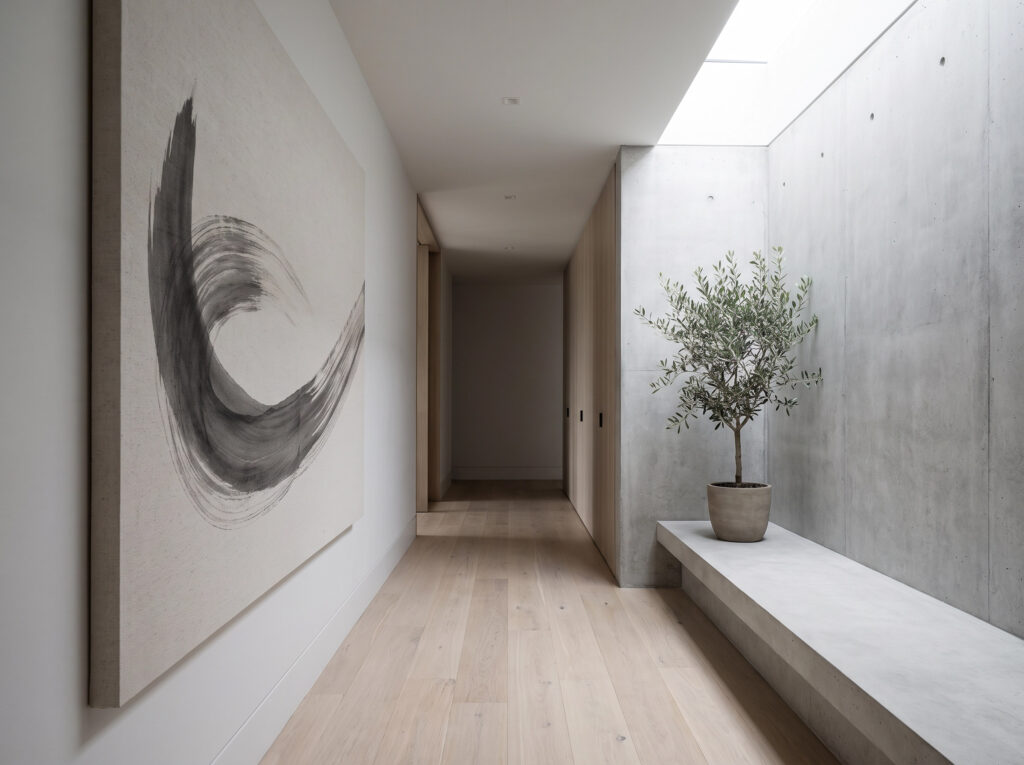
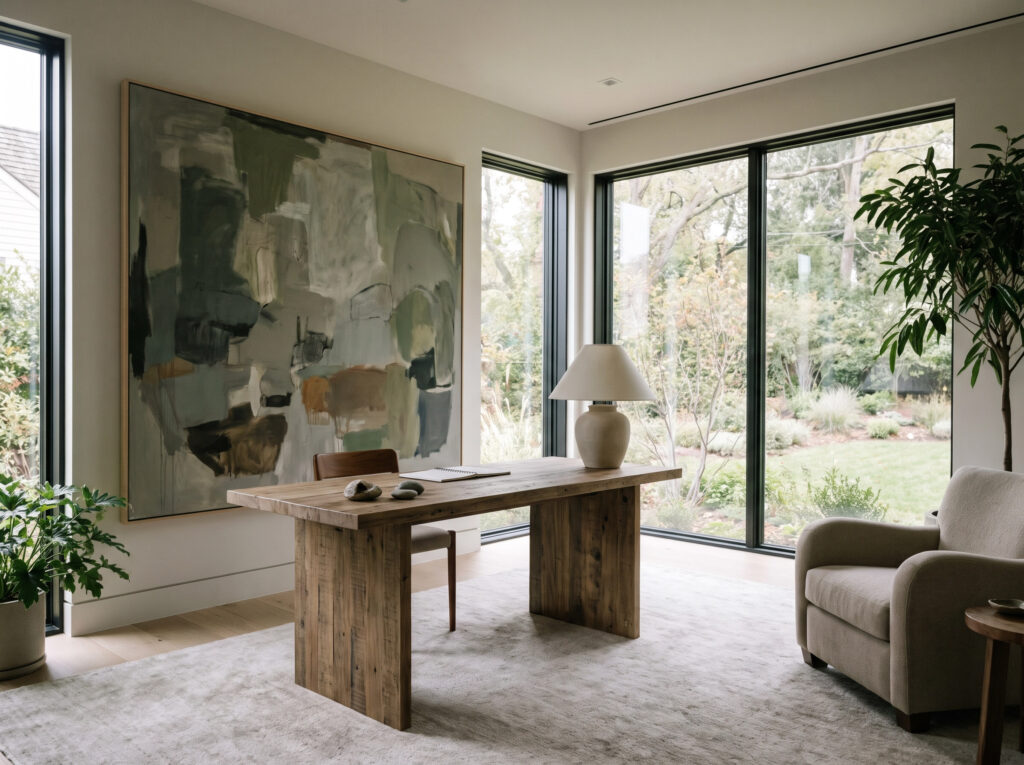
4. Cognitive Sanctuaries: Art in the Home Office
As the boundaries between work and life blur, the home office often becomes a source of stress rather than productivity. Introducing art into this space creates a “cognitive sanctuary.” A study in Neuroaesthetics suggests that viewing abstract art can enhance creative problem-solving by encouraging the brain to make new, non-linear connections.
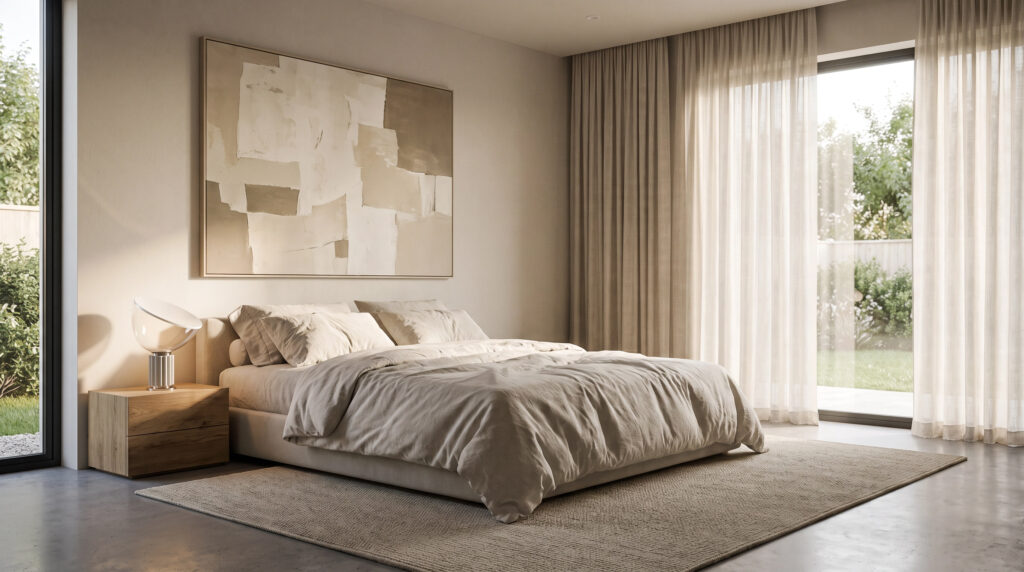
5. Restorative Sleep: The Bedroom as a Gallery of Peace
The bedroom should be the ultimate sanctuary. Avoid high-contrast or aggressive imagery here. Instead, opt for monochromatic works or soft gradients that mimic the natural transition into sleep. Minimalist art in the bedroom doesn’t just decorate the walls; it sets the frequency for deep, restorative rest, far removed from the blue light of our devices. This transformation is key to establishing Art as an Emotional Sanctuary in your private quarters.
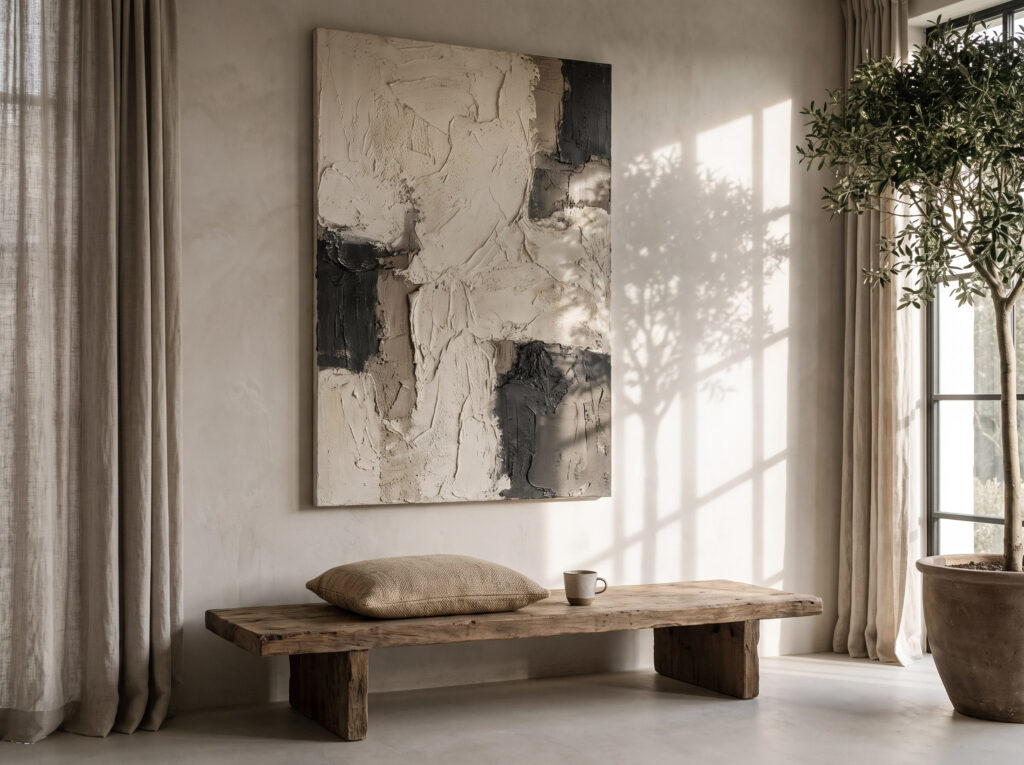
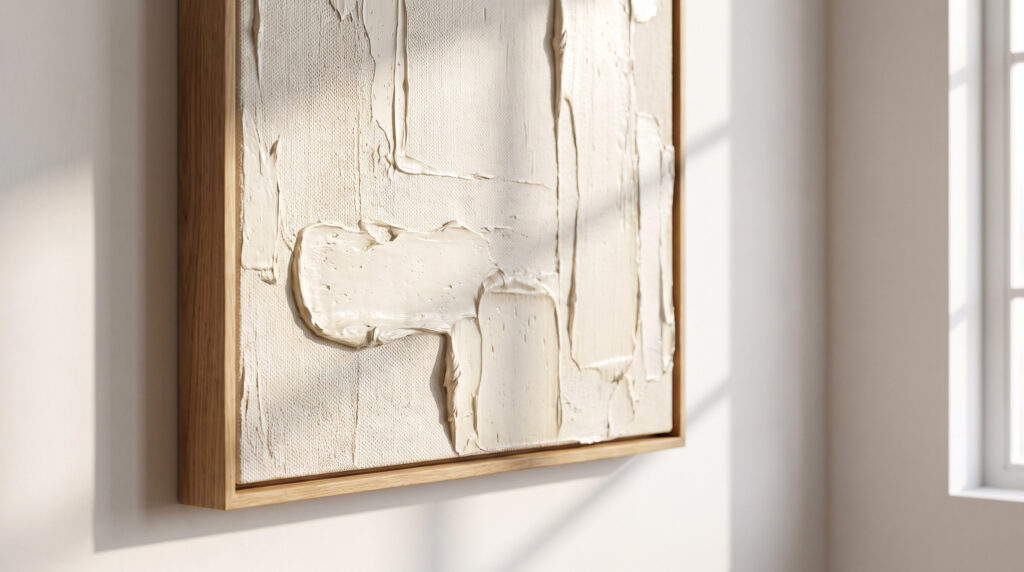
6. The Tactile Connection: Texture as Grounding
In a “phygital” world, we often lack tactile stimulation. Art with heavy impasto or visible canvas grain provides a “visual touch” that grounds us in the physical moment. This sensory richness is a core component of Minimalist Art and Slow Living, reminding us to slow down and appreciate the craftsmanship of the physical world.
7. The Private Gallery: A Journey of Self-Discovery
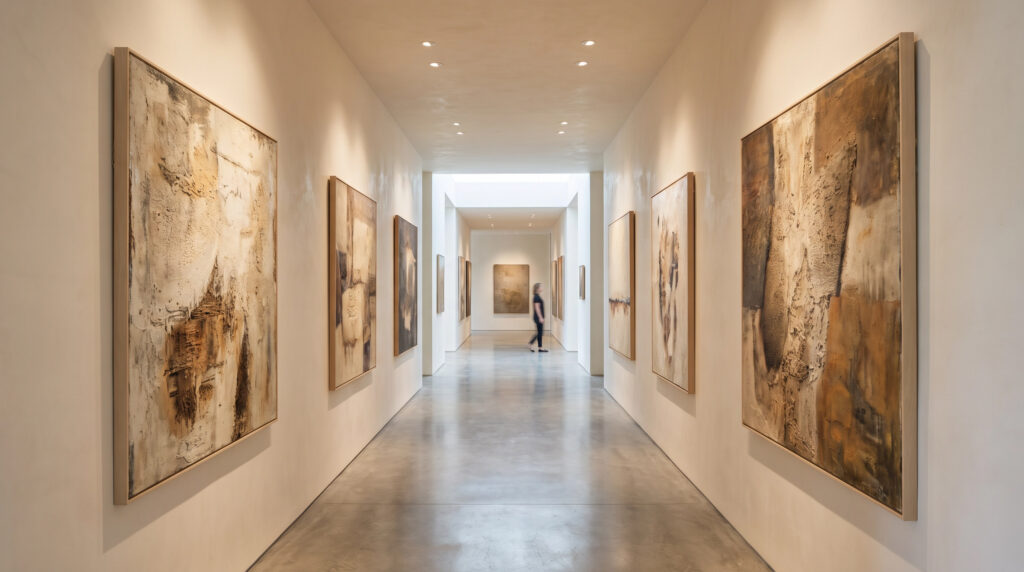
Building a private gallery is the ultimate way to experience Art as an Emotional Sanctuary. Creating a private gallery in your hallway or transitional spaces turns your home into a narrative of your own emotional journey. Each piece becomes a milestone of a moment you felt inspired, calm, or challenged. This is the essence of being the Final Curator of your own life—selecting only what serves your soul.
Conclusion: Investing in Your Emotional Infrastructure
Art is not a luxury for the eyes; it is a necessity for the mind. By choosing to live with art that acts as an emotional sanctuary, you are investing in your own emotional infrastructure. At Prime Vista Art, we invite you to look beyond the frame and see the peace that lies within.