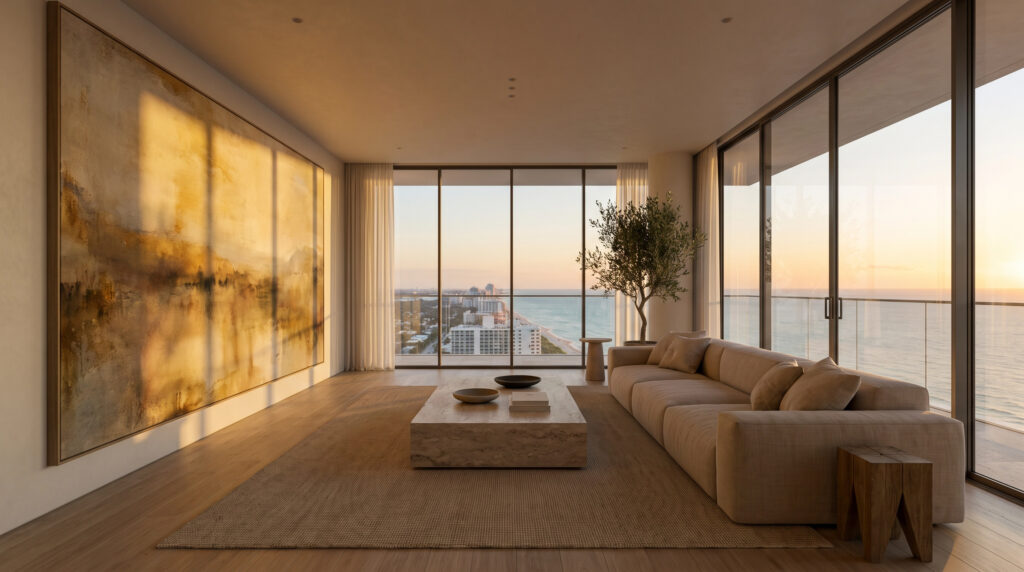

Minimalist Art and Slow Living are not merely aesthetic choices; they are a gentle rebellion against the relentless noise of the modern world, offering a path to reclaim our focus and tranquility. In an era where our attention is the most sought-after commodity, the act of curating a space with intention becomes a profound form of self-care. By embracing the philosophy of subtraction, we transform our homes from mere shelters into sanctuaries of inner order.
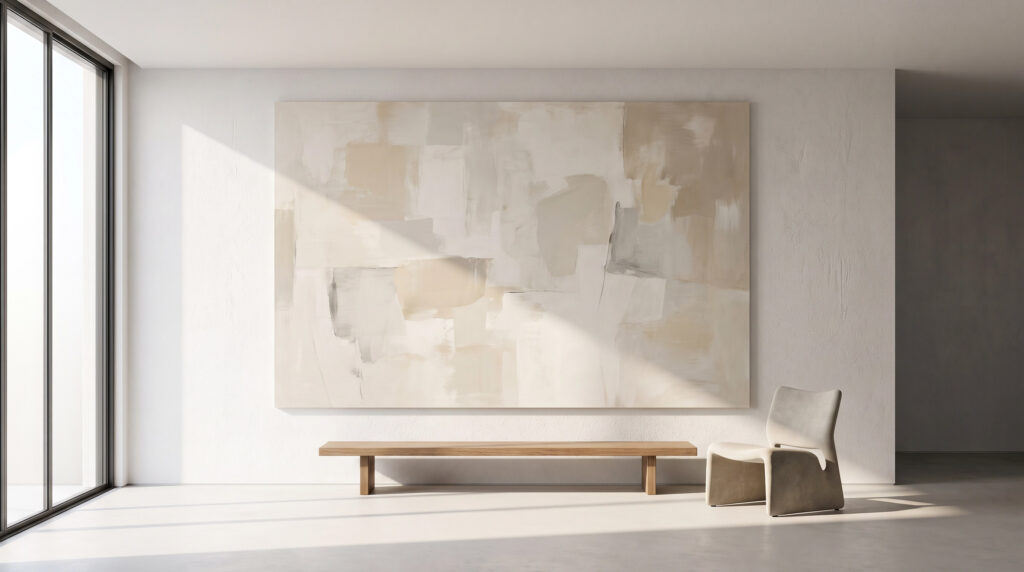
I. The Visual Anchor: Finding Stillness in the Frame
The core of Minimalist Art and Slow Living lies in the power of the visual anchor. In a room filled with digital distractions, a single, large-scale minimalist painting serves as a silent commander of attention. It doesn’t shout; it invites. As explored in our guide on [The Private Gallery], your home is the final curator of your collection, and a minimalist piece provides the stillness necessary to begin that dialogue. It acts as a focal point that allows the eye to rest, effectively lowering the cognitive load of the space.
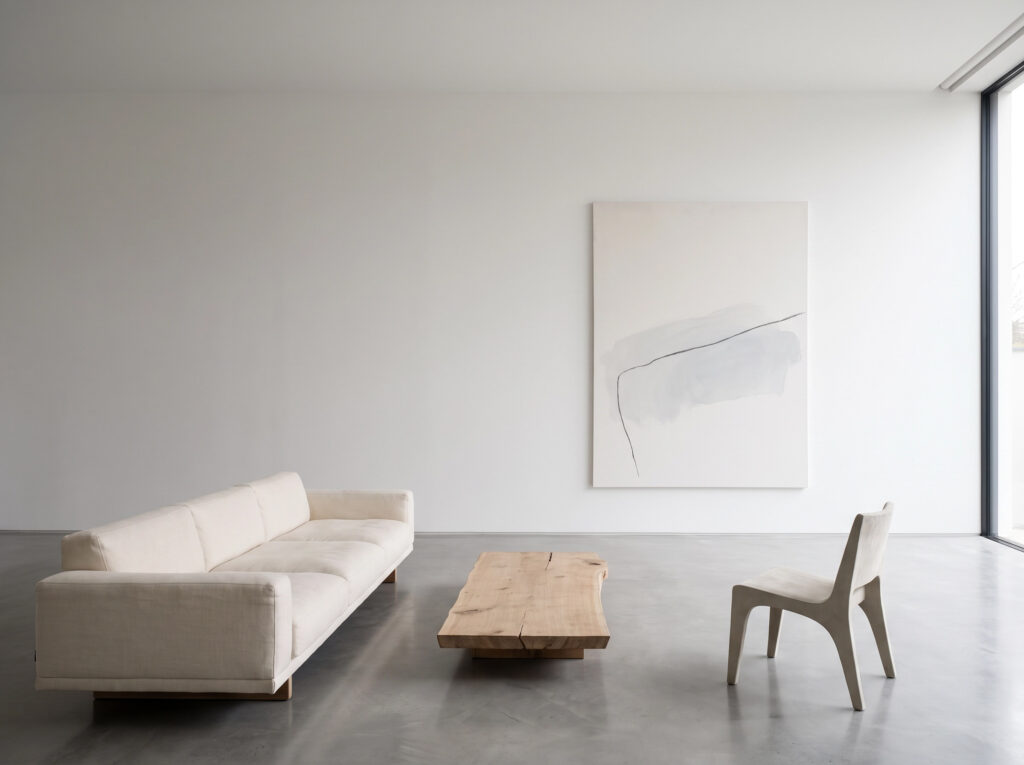
![Minimalist Art and Slow Living: A single bold line abstract painting serving as a visual anchor.]](https://primevistaart.com/wp-content/uploads/2026/07/slow_living_anchor-1024x765.jpg)
II. The Psychological Power of Negative Space
We often fear emptiness, yet in the context of Minimalist Art and Slow Living, negative space is where the mind breathes. A minimalist composition—characterized by clean lines and a restrained palette—removes the “visual clutter” that often mirrors our internal state. When the brain isn’t forced to process dozens of competing colors and shapes, it naturally shifts into a state of contemplation. This “sensory hygiene” is essential for maintaining mental clarity in a fast-paced environment.
III. Curating Intention: The Shift from Consumption to Connection
Adopting a lifestyle of Minimalist Art and Slow Living requires a shift from impulsive consumption to intentional connection. Instead of filling walls with transient trends, the slow collector seeks pieces that resonate on a visceral level. This intentionality extends beyond the canvas to the very way we inhabit our rooms. For those beginning this journey, our [wall art size calculator] can help ensure that your chosen masterpiece maintains the perfect equilibrium with your architectural surroundings, preventing the space from feeling overcrowded.
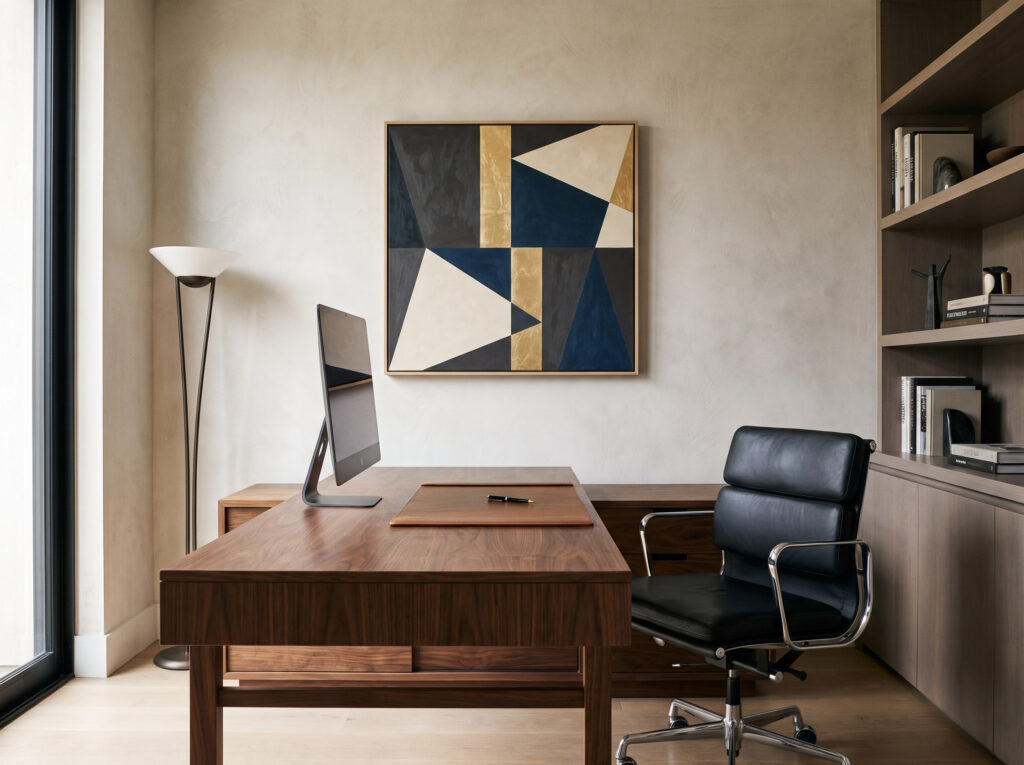
IV. Sensory Resonance: The Dialogue of Texture and Light
Minimalism is far from “cold” when it embraces texture. The interplay of light on a textured canvas—be it the heavy impasto of an oil painting or the subtle grain of a lithograph—creates a dynamic sensory experience. As we detailed in our exploration of [Art Lighting for Collectors], the way you illuminate these textures can sculpt the atmosphere of a room, turning a simple wall into a living narrative of light and shadow. This sensory richness is a hallmark of Minimalist Art and Slow Living, where quality is felt rather than just seen.
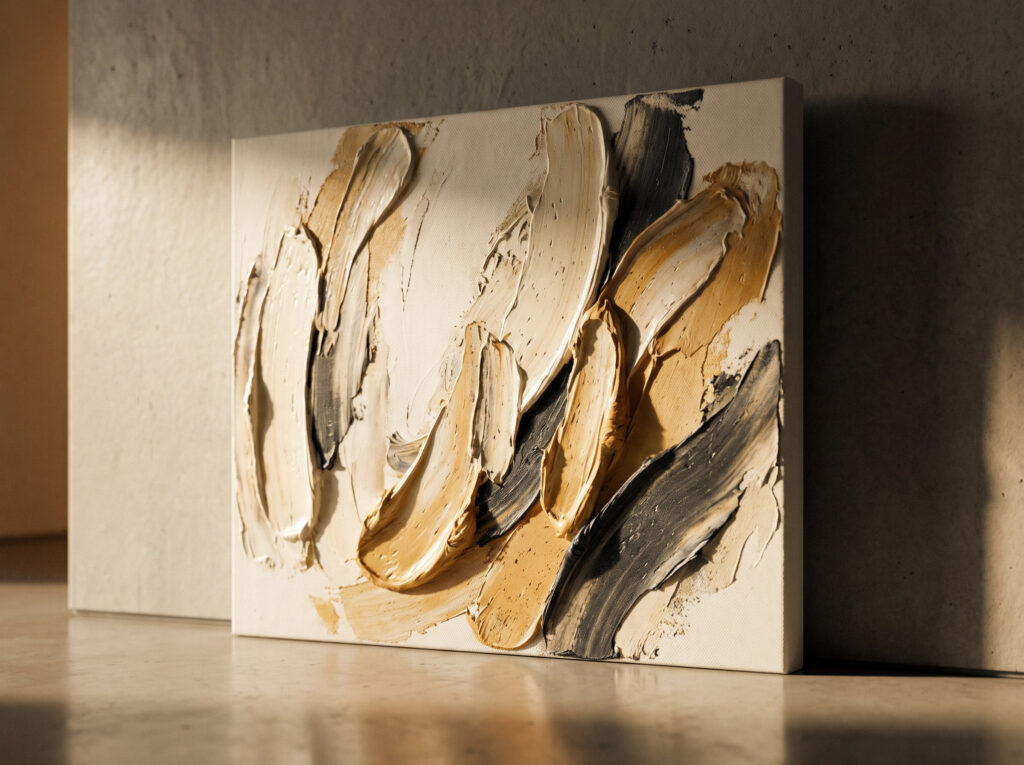
V. Creating an Emotional Sanctuary
Your home should be a reflection of the life you want to lead, not just the one you are currently enduring. By integrating Minimalist Art and Slow Living, you create an emotional sanctuary that buffers you against external chaos. Large-scale art, in particular, has a neuroaesthetic impact that can alter our perception of time and space, fostering a sense of immersion and safety. It is about creating a “Curated Mind”—a space where every object has a purpose and every void has a meaning.
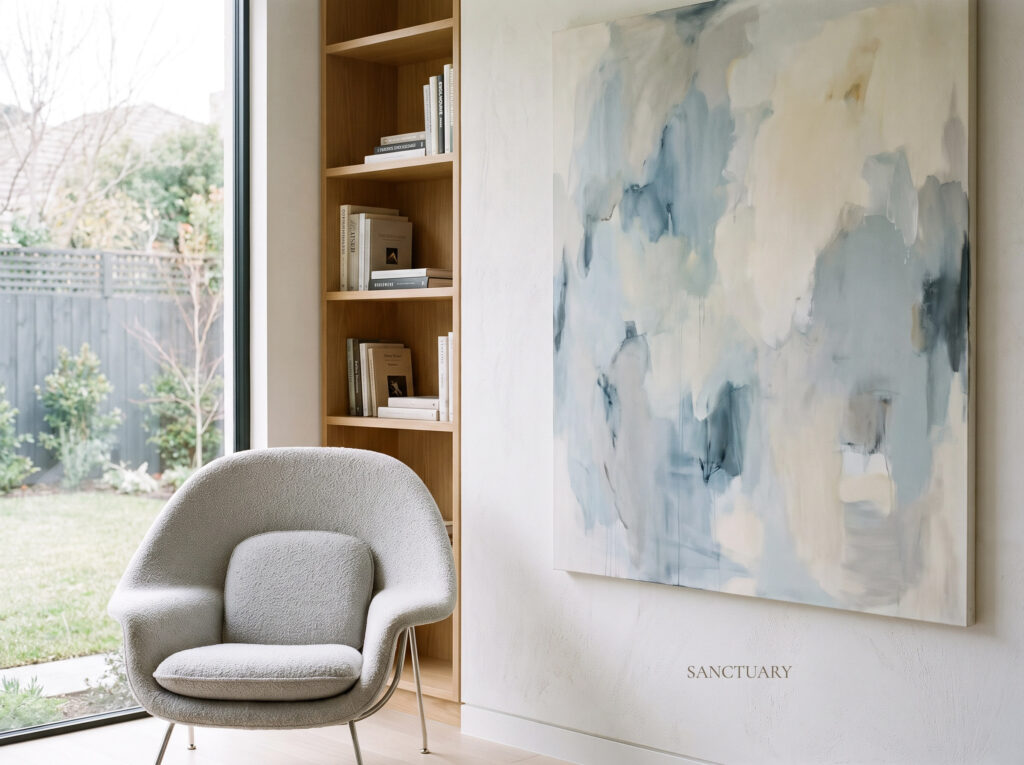
VI. The Investment in Quality over Quantity
In the realm of Minimalist Art and Slow Living, the mantra is simple: buy less, but buy better. Investing in a singular, high-quality original work is infinitely more rewarding than a dozen mass-produced prints. Platforms like [Saatchi Art] provide a curated gateway to artists who specialize in this minimalist language, allowing you to find pieces that will grow with you over decades. This long-term perspective is the antithesis of the “throwaway culture” and is the ultimate expression of slow living.
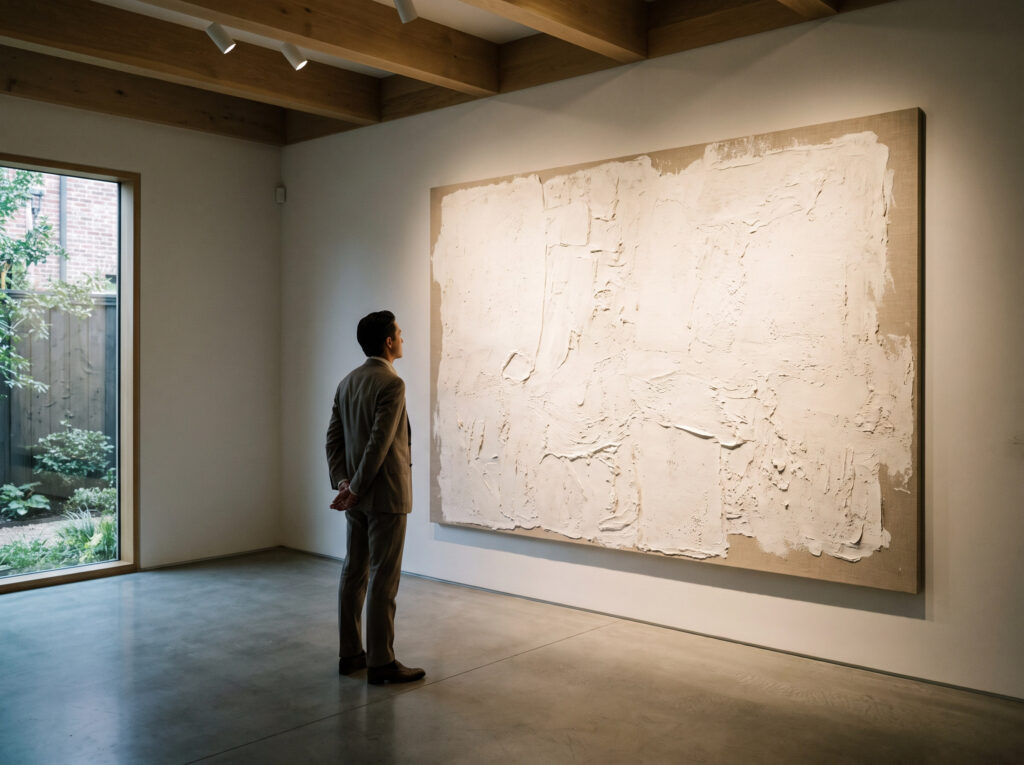
VII. The Order of Movement
A well-curated home understands the rhythm of daily life. By strategically placing minimalist works along common paths of movement—hallways, entryways, or stairwells—you create a consistent sense of order and calm that follows you throughout the day. This is not about static decoration, but about a living environment that supports your mental state at every turn. As we move through these spaces, the art acts as a rhythmic guide, reinforcing the principles of Minimalist Art and Slow Living in every step.
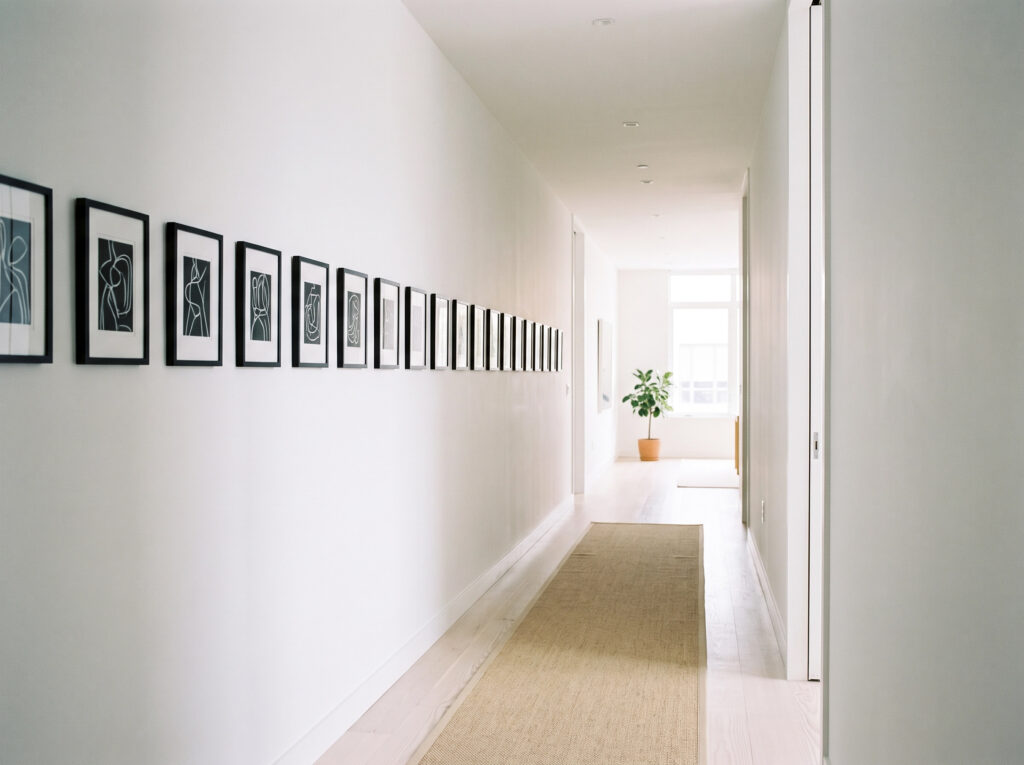
VIII. Conclusion: The Peace of the Present Moment
Ultimately, Minimalist Art and Slow Living are tools for returning to the present moment. They remind us that we do not need to be constantly doing, achieving, or acquiring to be whole. By stripping away the non-essential, we reveal the beauty of what remains. Whether it is the subtle shift of a shadow across a white canvas or the quiet joy of a clutter-free room, these moments of clarity are where we find our true order.