

A Practical Guide to Displaying Minimalist Art at Home
Minimalist art decor can transform a room without making it feel crowded. The right painting can change the rhythm, light, and emotional atmosphere of a space, but only when its scale, color, and placement work together.
A painting can look extraordinary in a gallery and feel strangely out of place when it arrives at home. It may be too small for the wall, too distant from the viewer, or surrounded by furniture that competes with its presence. In most cases, the problem is not the artwork itself. The artwork simply has not yet found the right relationship with its space.
Displaying art is not merely a matter of putting a painting on a wall. It is about allowing the artwork and the room to strengthen one another. When scale, color, viewing distance, and surrounding space are carefully balanced, a minimalist work does not need to be loud to become the most memorable presence in the room.
At Prime Vista Art, we are interested in the moment when art moves beyond the gallery and becomes part of everyday life. You do not need a professional design background to use this guide. You only need to begin with your own room, your own routines, and the kind of atmosphere you want to live with.
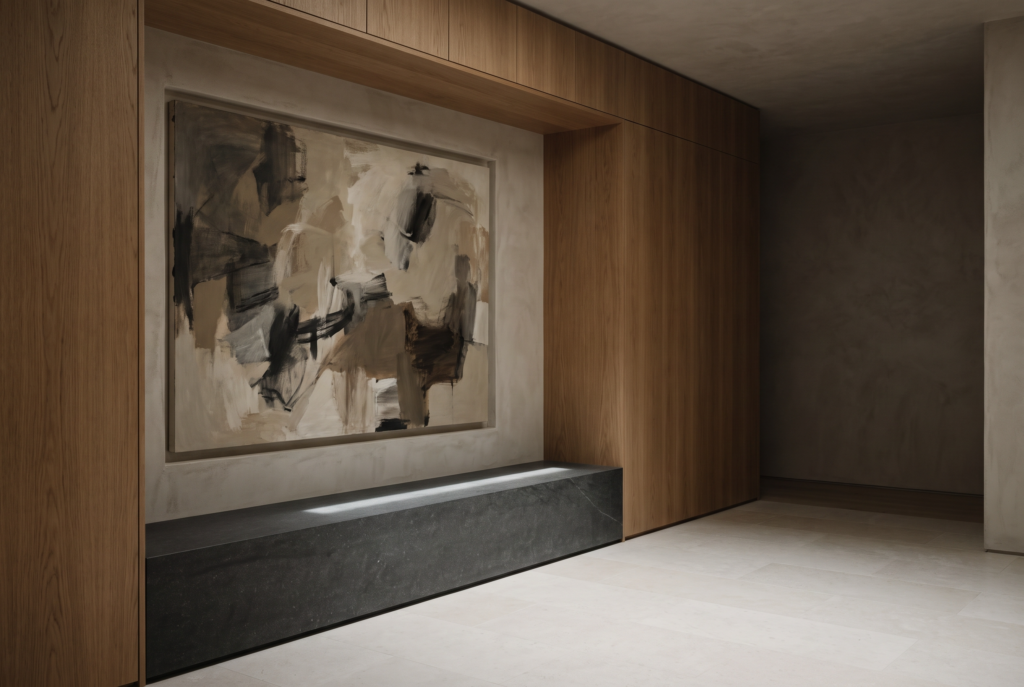
1. Minimalist Art Decor Begins with the Room
Every room has a character of its own. Some spaces feel quiet and restrained, while others are bright, social, and open. Some need a work that creates a calm visual center; others need a work with enough structure or color to give an empty interior more depth.
Before choosing a painting, ask yourself one simple question: What do I want this room to make me feel?
If the answer is calm, warmth, or stillness, look for a composition with generous breathing room and a restrained palette. If the room already contains many decorative details, a work with clear lines and controlled color may create more elegance than a visually crowded image. If the room feels too pale or unfinished, a painting with a defined shape or measured color tension can provide focus without overwhelming the space.
This is why art should not be treated as an accessory added at the very end. It helps establish the character of a room from the beginning. A bedroom may benefit from a quiet work that rewards repeated viewing, while an entryway may call for a stronger silhouette that can be understood as someone walks past. A study may need a painting that creates concentration rather than distraction.
The best minimalist art decor responds to the emotional character of the room rather than simply filling an available wall.
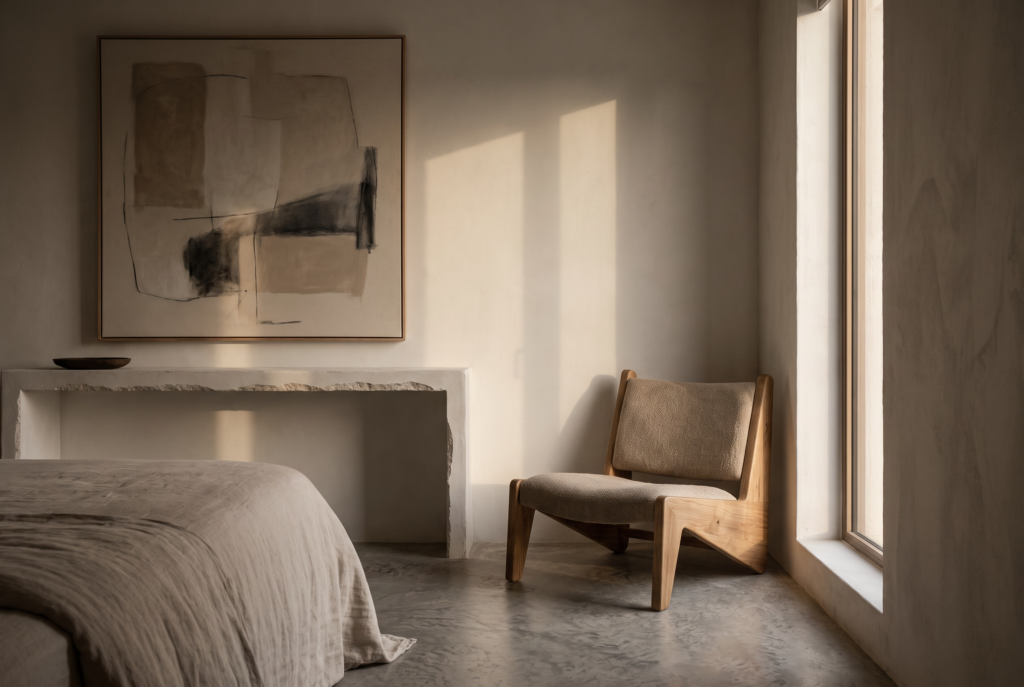
2. Scale and Proportion: A Large Wall Does Not Always Need a Large Painting
When people choose art, they often look only at the work itself. Yet the feeling of quality often comes from the relationship between the artwork, the wall, the furniture, and the viewing distance.
With minimalist art decor, proportion is what allows a quiet work to feel intentional instead of insignificant.
The wall above a sofa is one of the most common locations for a painting. If the artwork is much narrower than the sofa, the arrangement may feel loose and unfinished. If it is too wide, the seating area can feel visually heavy. Instead of memorizing one universal measurement, stand in the room and look from the places where people will actually see the work. The painting should feel important without making the furniture appear crowded.
A medium-sized work can also succeed on a large wall. The key is to make the surrounding space feel intentional. In minimalist interiors, an area of open wall is not necessarily empty; it can become a visual pause that gives the artwork room to breathe.
A single painting creates the clearest visual center and is often the easiest way to achieve a calm, refined effect. Two works do not need to be identical. They can be connected through tone, line, material, or emotional atmosphere. A larger grouping requires a stronger sense of overall composition, so it is wise to arrange the works on the floor and photograph the layout before making holes in the wall.
If you want a truly minimalist result, begin with one work. It is usually more elegant to give one painting generous space than to fill the wall simply because the wall is available.
This is the difference between thoughtful minimalist art decor and ordinary wall decoration.
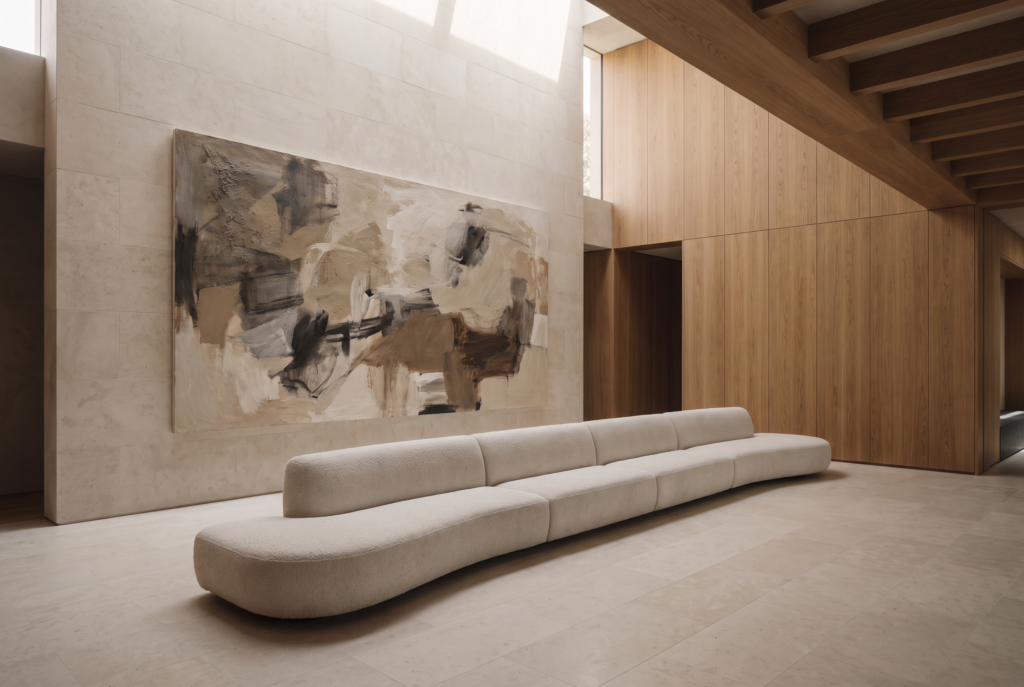
3. Color Coordination: Look for Echoes, Not Exact Matches
A painting does not need to repeat the exact color of a sofa, curtain, or rug. In fact, overly literal matching can make an interior feel flat. A more natural approach is to find one or two quiet echoes between the artwork and its surroundings.
A muted blue in the painting might relate to a metal surface, a cool window view, or the shadow side of the room. A warm earth tone might be gently supported by wood, leather, or warm lighting. The connection does not need to be obvious. Often, the most successful coordination is felt before it is consciously noticed.
Good minimalist art decor creates this kind of connection without forcing every element of the room to match.
For a deeper look at how color can shape the emotional reading of a space, see Minimalist Color Psychology: How Color Influences the Atmosphere of a Room. Color psychology should not be treated as a rigid formula, however. The most important question is whether you are happy to live with the palette for a long time.
Begin by identifying the three dominant colors already present in the room: the wall color, the largest piece of furniture, and the floor or window treatment. Then look for a painting that quietly connects with one of them while introducing a measured contrast through another color. This approach is more flexible than trying to match everything perfectly. A home should feel composed, not manufactured. In this way, minimalist art decor feels connected to the home without becoming visually predictable.
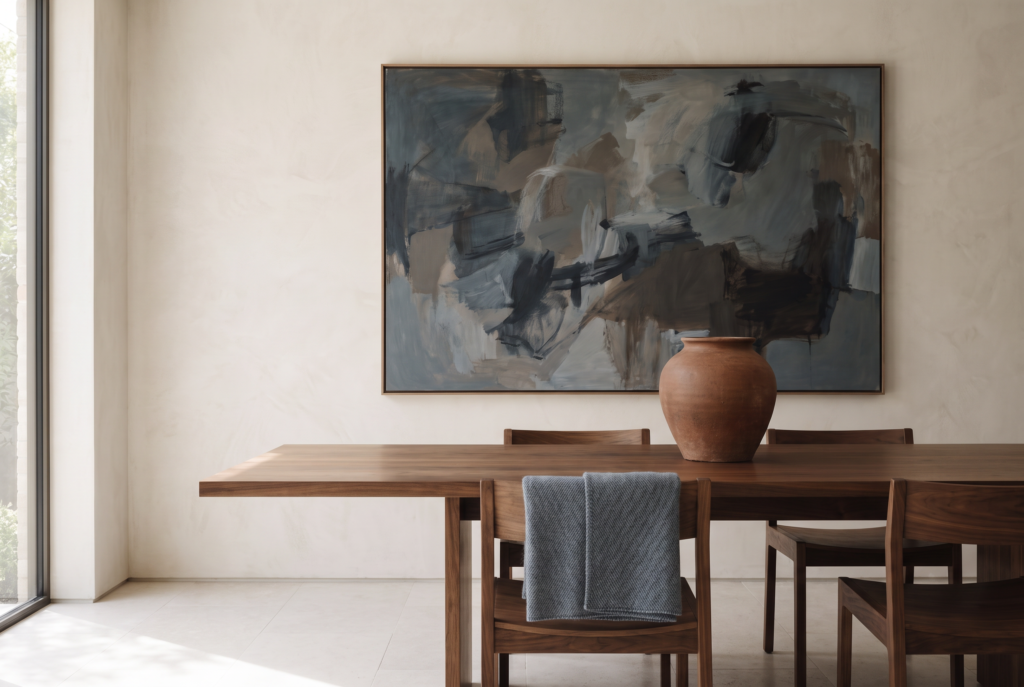
4. Furniture and Materials: Give the Artwork a Supportive Background
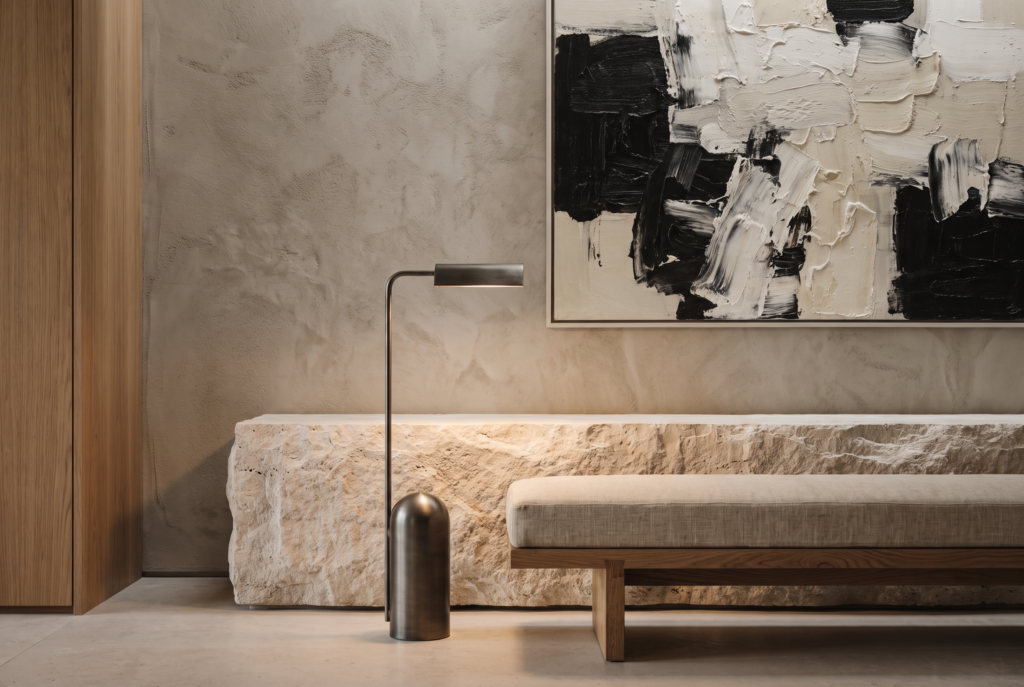
Minimalist art does not belong only on a white wall. Warm wood, natural stone, brushed metal, linen, wool, and leather can all provide a compelling background. The challenge is to prevent every material from competing for attention at the same time.
The purpose of minimalist art decor is not to remove personality, but to give the most meaningful elements enough room to be noticed.
If the artwork contains a strong network of lines or marks, simpler furniture can give it a quieter setting. If the painting is highly restrained, tactile materials such as wood, linen, or wool can introduce warmth around it. Black metal can sharpen a monochrome work, while pale timber and soft neutral fabrics can make a natural palette feel more relaxed.
The frame is part of this material conversation. A narrow black frame often feels precise, a wood frame adds warmth, and a generous mat can create a gradual transition between artwork and wall. There is no universally correct frame. Consider the painting, the wall, the furniture, and the light together.
The relationship between art and architecture is also explored in The Private Gallery: Why Your Home Is the Final Curator. The most successful home displays do not make the artwork compete with the interior. They create a setting in which both can be appreciated more fully.
5. Hanging Height and Viewing Distance: Bring the Artwork into Everyday Sight
A painting does not automatically feel more impressive when it is hung higher. If it is too high, the viewer may feel disconnected from it. If it is too low, furniture may obstruct it or the arrangement may feel compressed.
The most useful reference point is the way the room is actually used. Sit on the sofa, stand at the entry, or work at the desk and observe whether the central area of the artwork falls within a natural range of vision. Before fixing anything permanently, use paper or removable tape to mark the approximate outline on the wall. Look at it from the main seating position, from the entrance, and along the room’s natural walking path.
This simple test can prevent an expensive mistake. Also check doors, cabinet openings, and circulation areas. Artwork belongs not only to a wall but to the movement of the entire room.
The best placement often becomes apparent when the artwork is allowed to participate in the room rather than dominate it. It should be visible enough to invite attention, yet comfortable enough to remain part of daily life.
6. Lighting and Negative Space: Refinement Often Comes from Doing Less
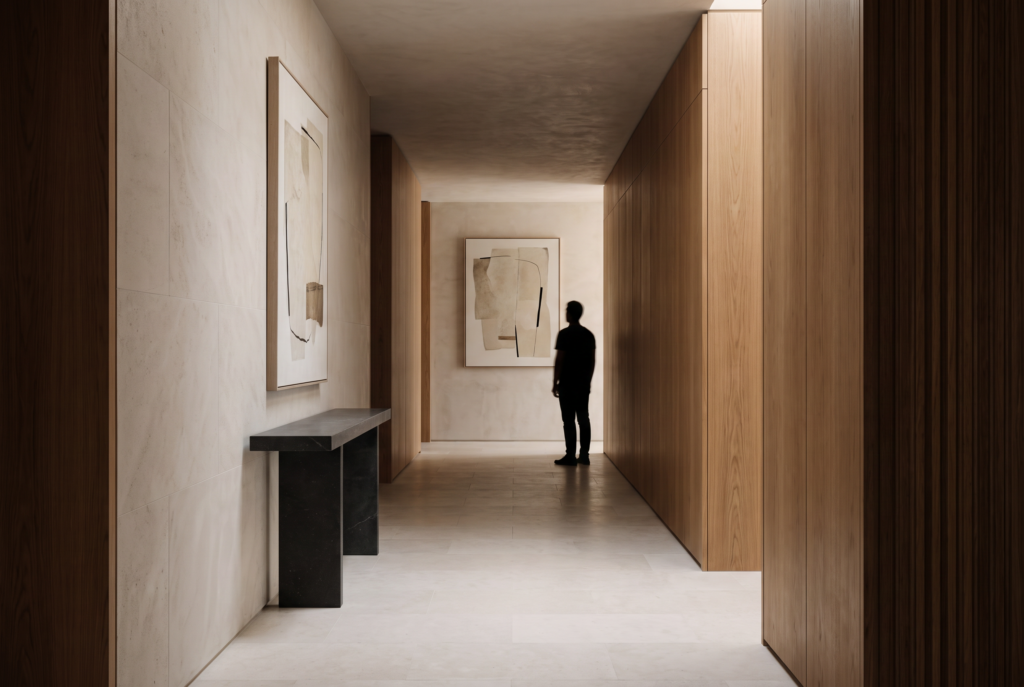
Light changes the way we perceive color, texture, and depth. Direct or overly strong light can create glare, while a room that is too dark can hide the subtleties of the work. The goal is not to make the artwork look like a product in a display case. It is to let the viewer notice it naturally and remain with it for a little longer.
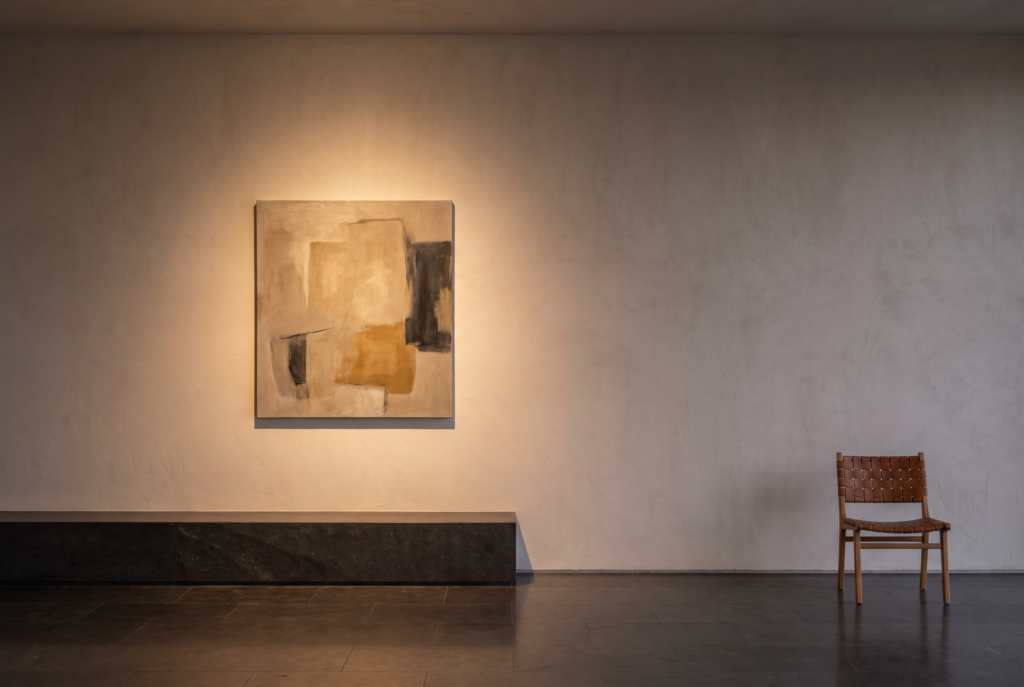
At home, you do not need a complex lighting system immediately. First observe the direction of daylight, then experiment with a soft, adjustable source in the evening. Avoid placing a strong beam directly against glass or another highly reflective surface. A gentle pool of light can be more effective than a bright wash across the entire wall.
Negative space matters just as much. The open wall around a painting is not wasted space. It is the pause that allows the eye to separate the artwork from books, furniture, and daily objects. If a painting needs many surrounding decorations to feel complete, it may not yet have found the right location.
For a related discussion of light, atmosphere, and the presence of art in an interior, explore Light as Sculpture: The Art and Science of Lighting Fine Art. You can also browse MoMA’s overview of Minimalism for broader context on the movement’s emphasis on form, space, and reduction.
7. A Final Question Before You Buy or Hang
Before making a final decision, step back from the practical details and ask whether the artwork belongs to your life. Can you see it clearly from the main seating position? Does it have enough space around it? Does it quietly relate to at least one material or color already present in the room? Most importantly, would you enjoy seeing it every day?
The final question may be the most important. Art is not a single-use visual purchase. It enters ordinary life: breakfast, reading, work, quiet afternoons, and the transition between one day and the next. Choosing a work you are willing to look at repeatedly is often closer to the meaning of collecting than following a temporary trend.
Conclusion: Let Art Become the Rhythm of the Room
A painting can transform a room without being expensive, oversized, or dramatic. Scale helps it stand firmly in the space. Color allows it to connect. Lighting lets it be seen. Negative space gives it room to breathe.
If you are choosing your first artwork, begin with a real moment in your daily life. Ask what you would like to feel when you return home and see that wall. Once the answer becomes clearer, choosing art is no longer only a search for something beautiful. It becomes a choice about the visual language you want to live with. The strongest minimalist art decor remains visually quiet, yet continues to reveal new details as the room and the people in it change.
For a further exploration of art and everyday emotional life, read Art as an Emotional Sanctuary: Why We Need Places for Quiet Looking. If you are considering the longer-term meaning of a minimalist work, continue with The Investment Value of Minimalist Art: From Aesthetic Choice to Long-Term Collecting.
When chosen with care, minimalist art decor becomes part of the atmosphere of a home rather than a separate decorative object. Thoughtful minimalist art decor gives a home a visual center while preserving the calm that makes the space feel personal.